





The integration of Augmented Reality (AR) into industrial training is transforming how professionals acquire technical skills. In sectors such as manufacturing, automotive, and energy, the demand for highly skilled welders continues to grow, while traditional training methods struggle to keep pace with technological advancements and safety requirements.
In this evolving landscape, the welding simulator has emerged as a powerful tool that combines digitalization, automation, and immersive learning. Among these innovations, AR-based simulators stand out for their ability to recreate real-world welding environments with precision, efficiency, and scalability.
What is an AR welding simulator?
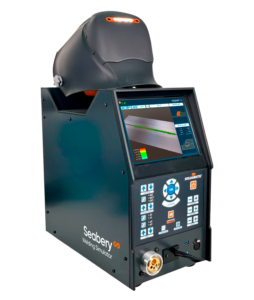
An AR welding simulator is a training system that overlays digital information onto the physical world, allowing users to practice welding techniques in a controlled, virtual environment. Unlike traditional methods, it does not require consumables such as metal plates, gas, or electrodes. These systems typically include:
- A physical torch or welding gun replica.
- AR-enabled helmets or screens.
- Sensors to track movement and technique.
- Software that evaluates performance in real time.
By combining industrial methodology with advanced visualization, AR simulators replicate real welding processes such as MIG, TIG, and stick welding with remarkable accuracy.
Key benefits of AR welding simulators
1. Enhanced learning through immersion
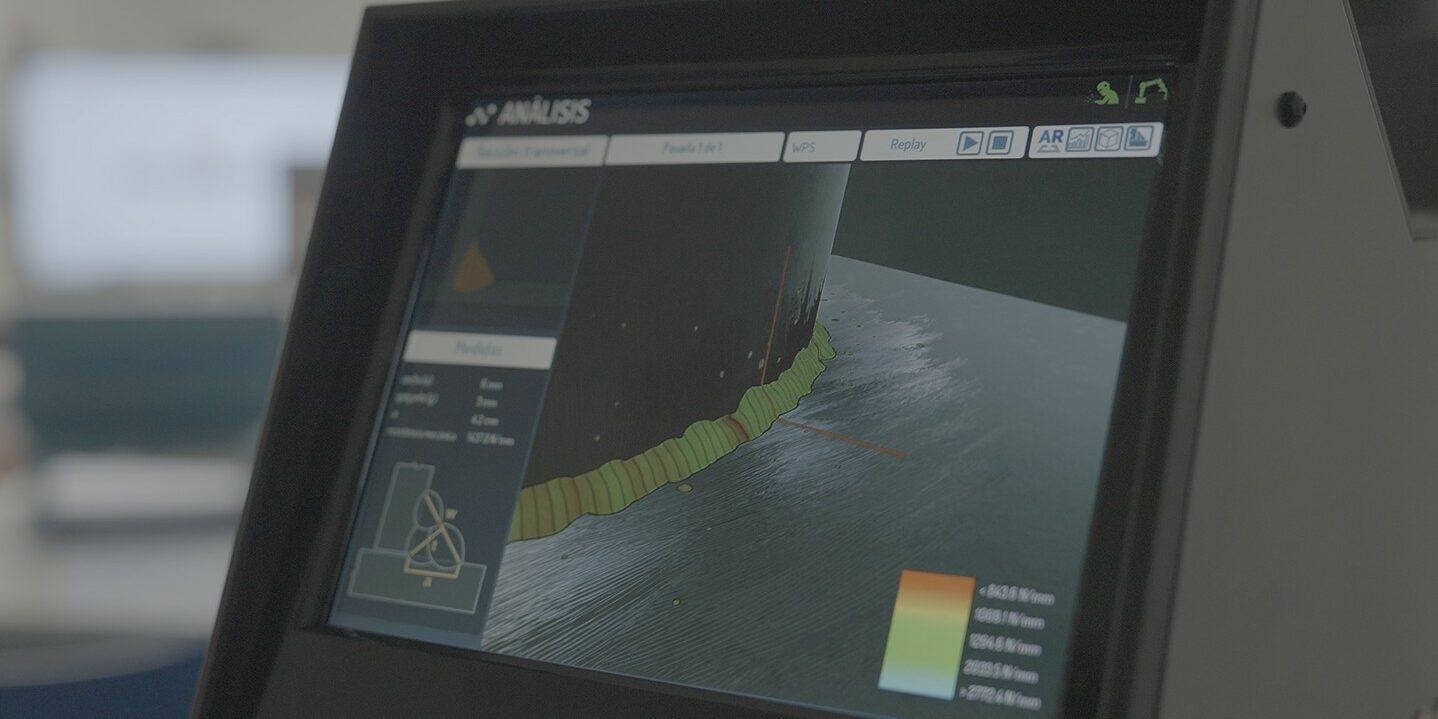
One of the main advantages of AR is its immersive nature. Trainees can visualize weld beads, penetration, and defects in real time, which significantly improves understanding. This methodology aligns with modern digital learning strategies, where experiential training leads to higher retention rates.
Immediate visual feedback significantly enhances skill acquisition by allowing trainees to instantly understand how their actions affect the welding outcome. At the same time, mistakes can be identified and corrected in real time, preventing the reinforcement of incorrect techniques.
As a result, complex welding processes become easier to grasp thanks to clear, guided visualization that simplifies learning and accelerates overall proficiency.
2. Improved safety conditions
Safety is a critical concern in welding training. Beginners are exposed to risks such as burns, fumes, and eye damage. This allows trainees to build confidence before transitioning to real-world welding scenarios. AR simulators provide:
- A completely safe learning environment.
- No exposure to hazardous materials.
- Risk-free repetition of exercises.
3. Cost reduction and resource optimization
Traditional welding training involves significant material costs, including metals, gases, and consumables. AR simulators eliminate these expenses, resulting in no material waste, while also minimizing equipment wear and tear since real machinery is not used during training.
Additionally, they significantly reduce energy consumption compared to traditional welding setups making them a more efficient and sustainable solution for industrial training environments.
4. Data-driven performance analysis
Modern AR welding simulators integrate data analytics, enabling instructors to monitor and evaluate performance with precision. This data-driven approach supports a continuous improvement methodology, allowing both trainees and instructors to identify weaknesses and track progress over time. Key metrics include:
- Travel speed.
- Work angle and torch positioning.
- Arc length.
- Stability and consistency.
5. Standardization and automation of training
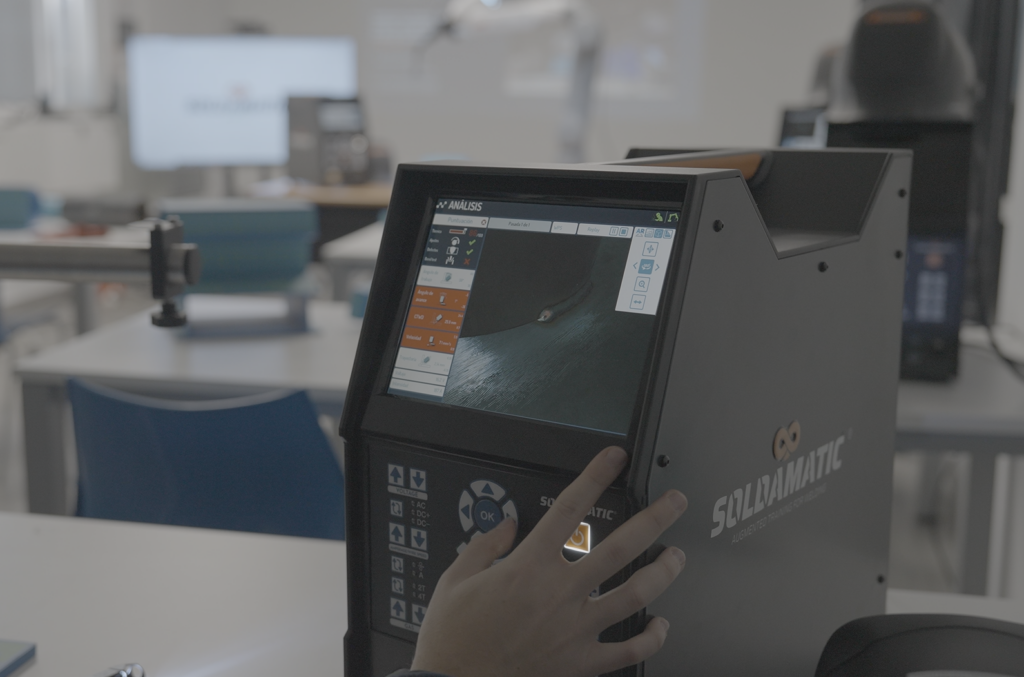
AR welding simulators ensure that all trainees follow the same structured learning path, regardless of location or instructor variability, enabling consistent training standards across different institutions.
Automated evaluation processes ensure objective and precise assessment of each trainee’s performance providing a unified learning framework. Additionally, their scalability allows organizations to efficiently expand training programs, adapting to growing demands without compromising quality or consistency.
This is especially valuable for large industrial companies seeking to standardize skills across multiple facilities.
6. Faster skill development
AR simulators significantly reduce training time and accelerate learning curves by combining immersive learning with instant feedback and repetition, as trainees can practice more frequently without the limitations of physical resources.
The ability to repeat exercises as often as needed reinforces skill development; at the same time, immediate correction of errors ensures that mistakes are addressed in real time, leading to faster improvement and greater overall proficiency.
This efficiency is crucial in industries facing a shortage of qualified welders.
Why AR welding simulators are leading industrial digitalization
The adoption of AR welding simulators is closely linked to broader trends in automation and digital transformation. Industries are increasingly investing in smart technologies to improve productivity, reduce costs, and enhance workforce capabilities. By bridging the gap between theory and practice, these tools are redefining how welding is taught and mastered in modern industrial ecosystems.
AR simulators contribute to:
· Workforce upskilling in a digital environment.
· Integration with Industry 4.0 strategies.
· Creation of digital twins for training and assessment.
Within this technological evolution, Seabery has positioned itself as a global leader in AR-based welding training. Our solution represents a cutting-edge combination of augmented reality, advanced analytics, and industrial methodology.
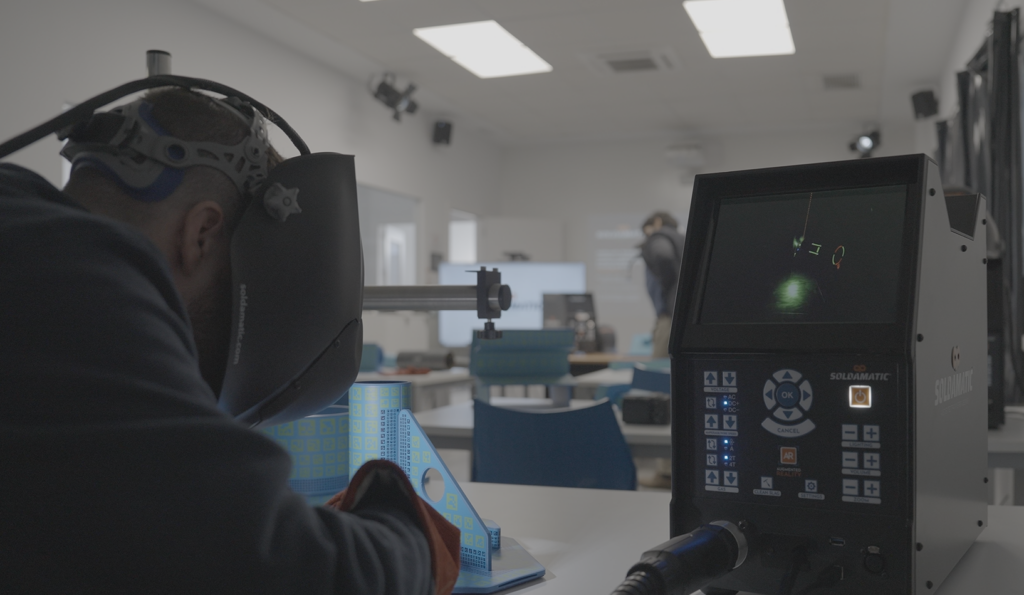
Seabery Welding Simulator offers a highly realistic simulation of welding processes, allowing users to experience conditions very close to real-world environments, while also incorporating comprehensive performance tracking and reporting systems that provide detailed insights into each trainee’s progress.
In addition, its adaptability makes it suitable for both educational institutions and industrial settings, and its seamless integration into digital training ecosystems supports broader strategies of automation and digitalization.
Seabery’s approach not only enhances learning outcomes but also supports organizations in their journey toward automation, making it one of the best AR welding simulator solutions available today.
The future of welding training
AR welding simulators are no longer a complementary tool: they are becoming a cornerstone of modern welding education and industrial training. Their ability to combine safety, efficiency, and data-driven insights makes them indispensable in today’s rapidly evolving industrial landscape.
As industries continue to embrace digital transformation, the role of AR in training will only grow, shaping a new generation of highly skilled, technologically proficient welders.
Would you like to book a free online demo?
If you are interested in experiencing first-hand the power of Seabery Welding Simulator, we invite you to complete our form to request a personalized demo – contact us now to explore the possibilities Seabery can offer your company or training center!