





Industrial welding has always been a critical activity across sectors such as automotive, aerospace, shipbuilding, railways, oil & gas, and heavy manufacturing. As industrial processes become increasingly complex and production environments more demanding, the need for highly skilled welders has never been greater. At the same time, companies face persistent challenges: skills shortages, rising training costs, safety concerns, and the pressure to improve productivity while maintaining quality standards.
In this context, welding simulation has emerged as a powerful tool to modernize industrial training and qualification processes. By combining Augmented Reality, digitalization, and advanced training methodologies, welding simulators allow industries to train, assess, and upskill welders in a more efficient, safe, and data-driven way. This article explores the main benefits and practical uses of welding simulation for industry, and how it is reshaping welding training worldwide.
What is welding simulation in an industrial context?
A welding simulator is a digital training system that replicates real welding processes using virtual or augmented environments. Unlike traditional training, which relies heavily on consumables, physical materials, and workshop time, simulation-based welding training enables welders to practice realistic scenarios without producing actual welds.
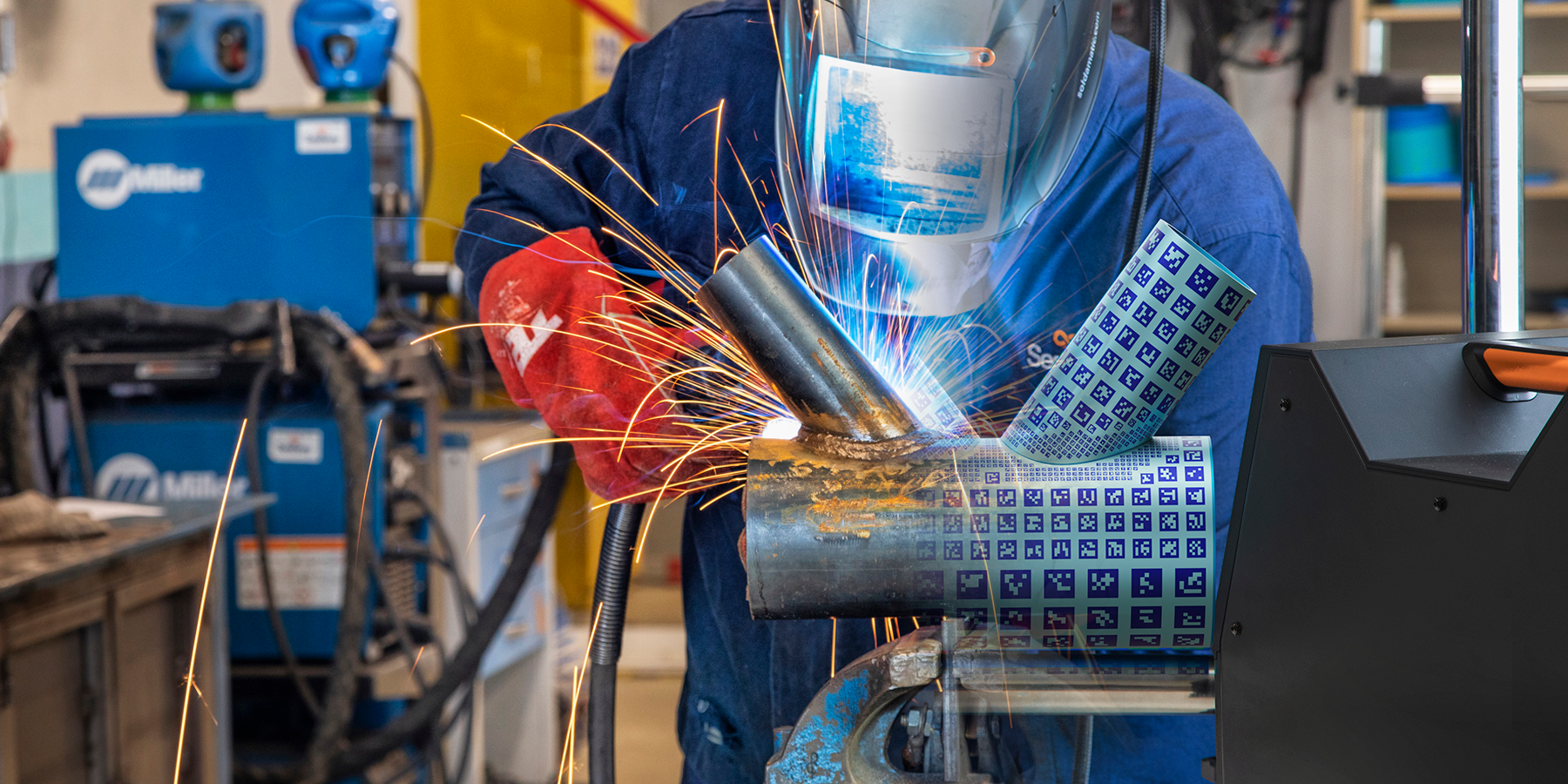
Industrial welding simulators typically recreate processes such as MIG/MAG, TIG, SMAW, and FCAW, allowing users to work with virtual workpieces, torches, and welding parameters. Through Augmented Reality, trainees interact with physical tools while seeing a digitally generated weld pool, arc behavior, and seam progression in real time. The system captures performance data, including torch angle, travel speed, arc length, and positioning, transforming practical welding into a measurable and repeatable learning experience.
This approach aligns perfectly with the broader trends of automation and digitalization in industrial environments.
Key benefits of welding simulation for industry
1. Cost reduction and resource optimization
One of the most immediate benefits of welding simulation is the significant reduction in training costs. Traditional welding training requires metal plates, filler materials, shielding gas, electricity, and dedicated workshop space. Simulation drastically reduces these consumables cost.
For industrial companies training large numbers of welders or running frequent upskilling programs, the cost savings are substantial. Welding simulators also minimize equipment wear and reduce downtime in production workshops, allowing companies to allocate resources more efficiently.
2. Improved safety and risk-free learning
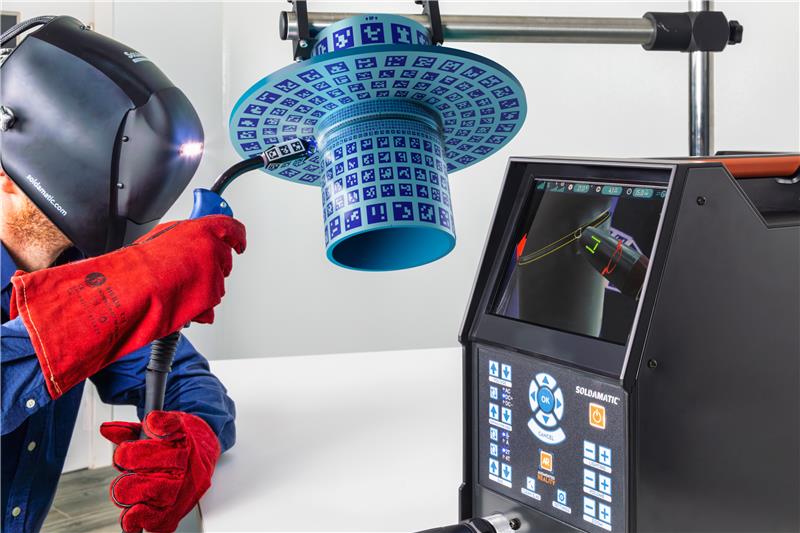
Industrial welding environments involve inherent risks, especially for beginners or operators learning new techniques. Welding simulation provides a safe, controlled environment where trainees can make mistakes without consequences
This is particularly valuable in industries such as oil & gas, shipbuilding, or heavy fabrication, where real-world errors can lead to accidents, rework, or costly failures. Simulation allows welders to build confidence and muscle memory before transitioning to real welding tasks.
3. Standardized and objective skill assessment
One of the biggest challenges in industrial welding training is ensuring consistent evaluation across different trainers, locations, and shifts. Welding simulation introduces objective, data-driven assessment.
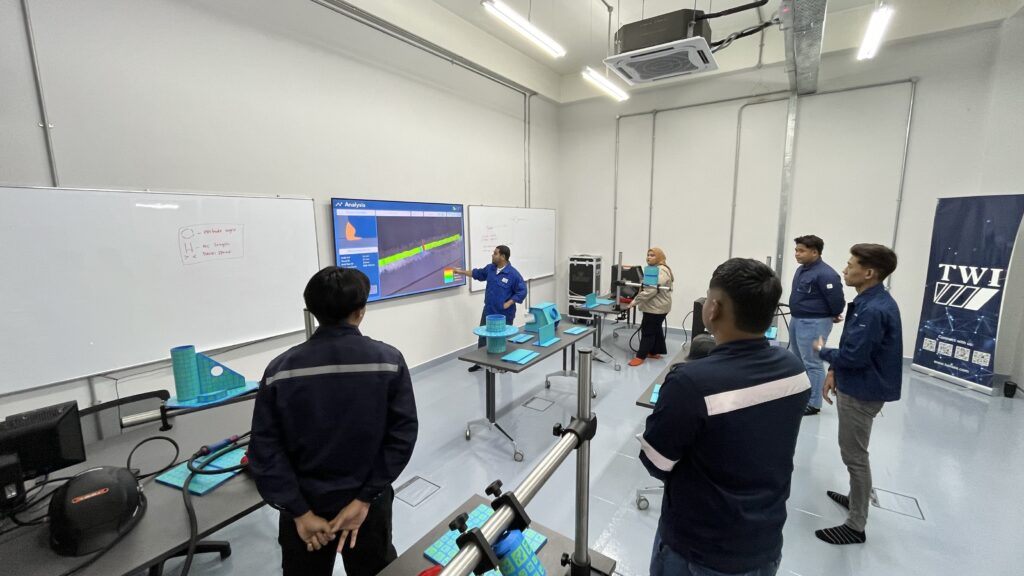
Simulators collect precise performance metrics and generate detailed reports that can be used to benchmark skills, identify weaknesses, and track progress over time. This standardization is especially useful for multinational companies, subcontractors, and industrial groups that must comply with strict internal or external quality standards.
4. Faster learning and skill acquisition
Simulation-based training accelerates learning by providing immediate feedback. Welders can instantly see how changes in torch angle, speed, or distance affect weld quality. This reinforces correct techniques more effectively than delayed feedback in traditional workshops.
Industrial training managers benefit from shorter training cycles, faster onboarding of new hires, and more efficient retraining when new processes or materials are introduced.
5. Alignment with industry 4.0 and digital transformation
Welding simulation fits naturally into Industry 4.0 strategies, where data, connectivity, and digital tools play a central role. Training data generated by simulators can be integrated into broader workforce management systems, supporting competency mapping, certification planning, and continuous improvement initiatives.
This digital approach helps companies future-proof their training methodologies while responding to the growing demand for traceability and quality assurance in industrial welding.
Practical uses of welding simulation in industry
Industrial companies use welding simulators to train new welders from scratch or to upskill experienced operators when introducing new welding processes, materials, or positions. Simulation is particularly effective for complex welds, out-of-position work, or high-precision applications.
Before assigning welders to critical projects, companies can use welding simulation to assess technical readiness. This helps ensure that only qualified personnel move on to real production tasks, reducing rework and quality issues.
By tracking individual and team performance over time, industrial organizations can identify training needs early and design targeted improvement plans. Welding simulation supports a culture of continuous learning and operational excellence.
As automation increases, many industries adopt hybrid models where human welders work alongside robotic or semi-automated systems. Welding simulators help operators understand process parameters and adapt to automated environments, improving overall system efficiency.
|
Welding simulation in industry: practical uses |
|
Workforce training and upskilling |
|
Pre-qualification and skills validation |
|
Continuous improvement and performance monitoring |
|
Supporting automation and hybrid processes |
Seabery’s contribution to industrial welding simulation
Within this evolving landscape, Seabery offers an advanced welding simulation solution designed specifically to meet industrial training needs. Through the Augmented Reality–based welding simulator, Seabery enables companies to combine realism, accuracy, and data analytics in a single platform.
Seabery’s solution supports multiple welding processes and industrial applications, allowing companies to tailor training programs to their specific sector requirements. The system provides detailed performance metrics, facilitating objective assessment and helping industrial trainers make informed decisions.
By reducing consumable costs, improving safety, and aligning with digitalization strategies, Seabery’s welding simulator becomes a strategic asset for industrial workforce development.
Smarter welding training for a competitive industry
Welding simulation is no longer a complementary tool: it is becoming a cornerstone of modern industrial training strategies. By combining Augmented Reality, digital methodology, and data-driven assessment, welding simulators help industries train better welders, faster and more safely.
As industrial sectors continue to evolve under the pressure of automation, digitalization, and global competition, investing in advanced welding simulation solutions is a clear step toward higher quality, efficiency, and sustainability. Companies that embrace this technology today will be better prepared to meet the welding challenges of tomorrow.