





Skills competitions have long played a crucial role in motivating students, benchmarking technical excellence, and connecting education with industry standards. In the field of welding, where precision, control, and consistency define professional success, competitive environments push students to refine both their technical knowledge and manual abilities.
From traditional booth welding contests to international events, competitions have proven to be powerful platforms for identifying talent and promoting vocational education. Today, augmented reality is expanding these possibilities, creating new formats that combine realism, objectivity, and digital performance analysis.
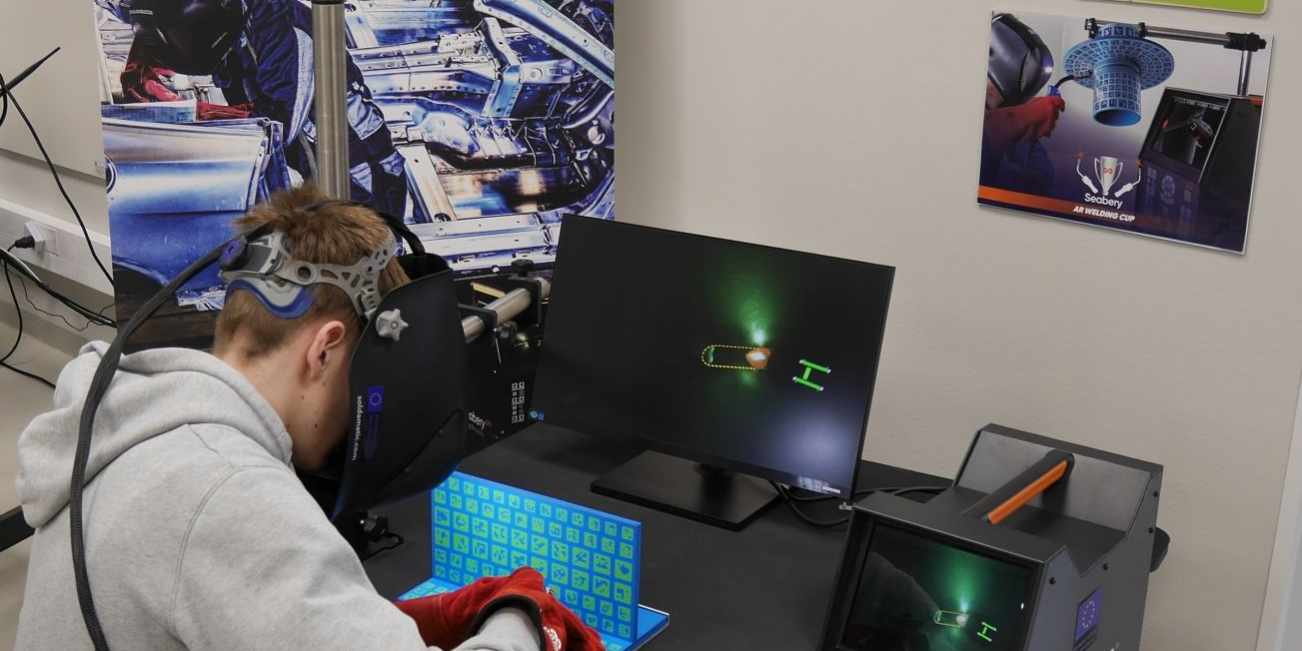
Between February 10th and 13th, Seabery, together with Machinetool, organized the Seabery CUP in Finland, an innovative welding competition powered by augmented reality technology.
A New Format for Welding Competitions
The Seabery CUP brought together 17 students from three Finnish vocational institutions:
- Tredu Tampereen seudun ammattiopisto (Tredu Ylöjärvi)
- Sedu Seinäjoen koulutuskuntayhtymä (Sedu Ähtäri)
- Kainuun ammattiopisto – Kainuu Vocational College
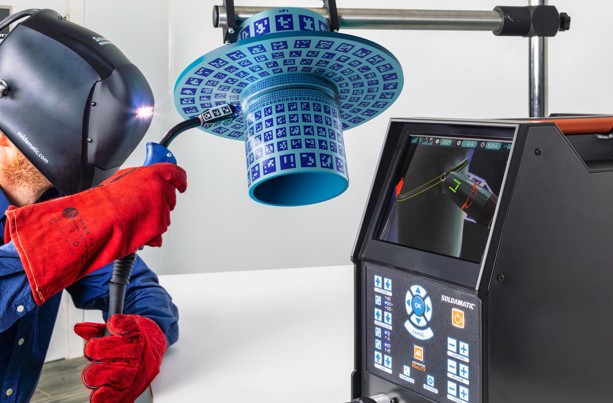
All participants competed using the Seabery Welding Simulator, a state-of-the-art augmented reality training system designed to replicate real welding processes while providing objective performance analytics.
Unlike traditional welding competitions that depend solely on visual inspection and destructive testing, augmented reality competitions allow for:
- Real-time tracking of welding parameters
- Objective scoring based on manual skills
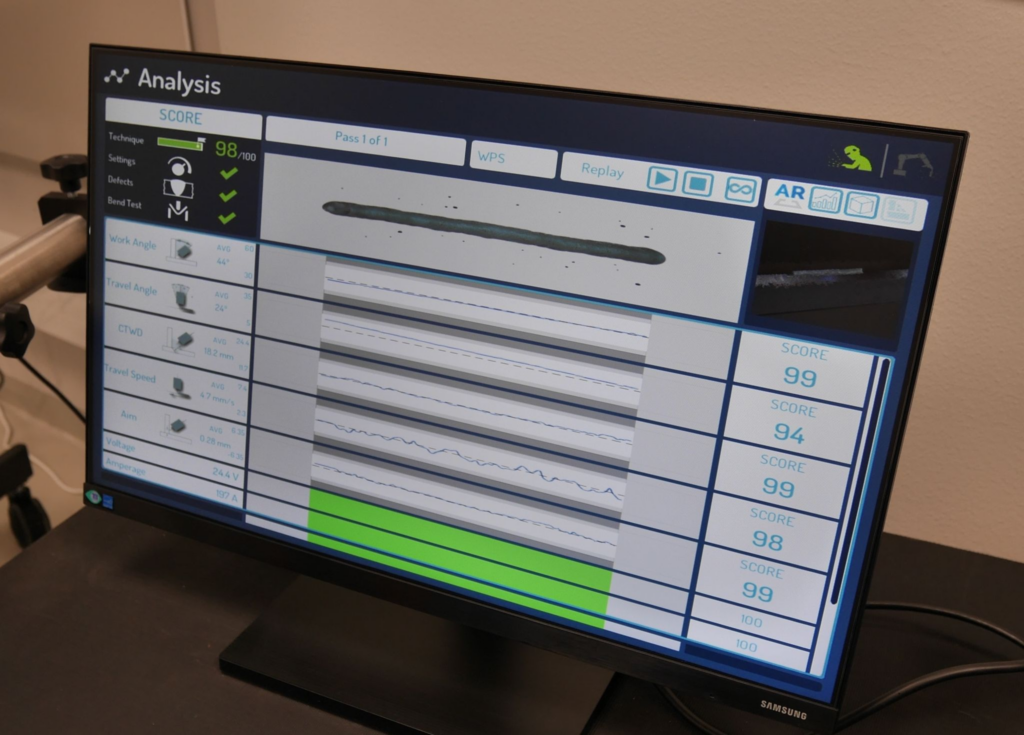
- Instant feedback and detailed performance reports
- Standardized evaluation criteria
This digital layer adds transparency and measurable precision to the competition format.
The Competition
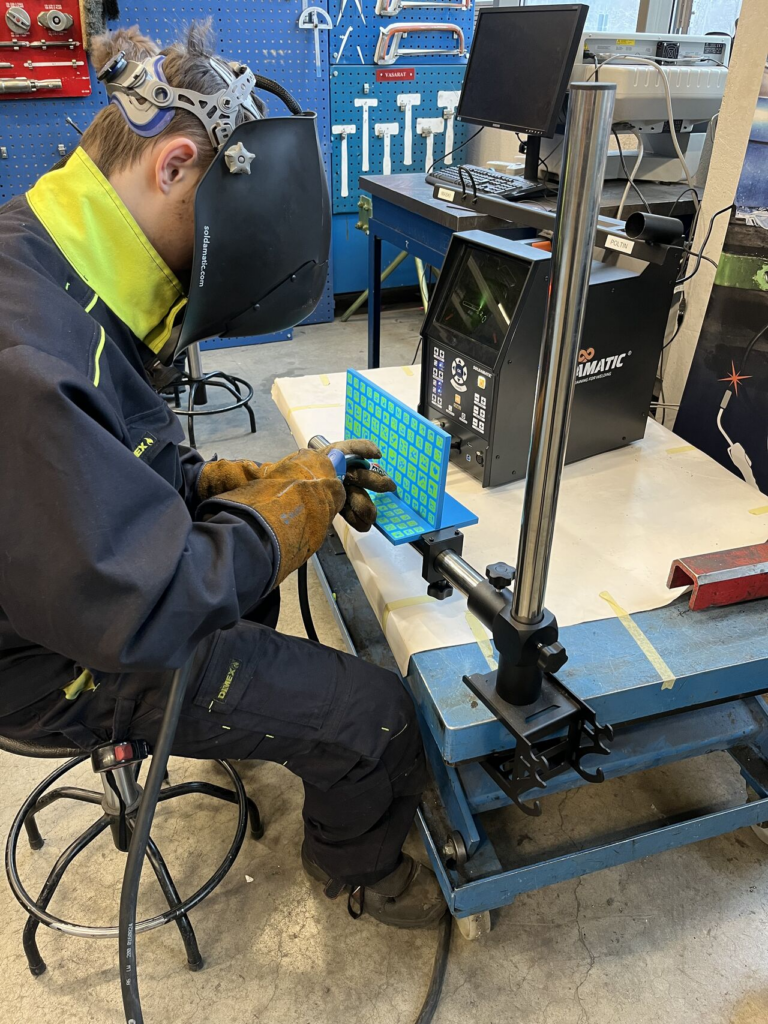
The competition consisted of two progressively challenging exercises focused on GMAW (Gas Metal Arc Welding) T-joints.
Exercise 1
This first exercise aimed to evaluate fundamental welding skills such as torch angle, travel speed, and distance control. With help guides activated and parameters correctly configured, students could focus primarily on refining manual technique and bead consistency.
Exercise 2
The second exercise significantly increased complexity. Participants were required not only to execute the weld but also to correctly configure welding parameters themselves. With minimal digital assistance, this stage evaluated deeper technical understanding, decision-making capacity, and adaptability under competitive pressure.
Because this exercise accounted for 75% of the final score, it became the decisive factor in determining the final ranking.
Final Ranking
After four days of competition, the final results were extremely close, highlighting the high level of preparation among participants.
| Position | Name | Score | Institution |
| 🥇 1st | Ossi | 91 | Kainuun Ammattiopisto |
| 🥈 2nd | Kaapo | 90 | Tampereen seudun ammattiopisto |
| 🥉 3rd | Lenni | 89.25 | Tampereen seudun ammattiopisto |
The narrow margin between the top three competitors demonstrates the precision of the scoring system and the strong technical skills of all finalists.
Augmented Reality vs. Traditional Welding Competitions
International competitions such as WorldSkills have long set the benchmark for excellence in vocational training. In these events, welders perform under strict technical standards and time constraints, replicating real industrial requirements.
Augmented reality welding competitions complement this model by offering several additional advantages:
- Unlimited practice opportunities without material consumption
- Safe training environments without fumes or physical risk
- Objective performance data for every movement
- Repeatable and standardized exercises
- Immediate feedback for skill improvement
Rather than replacing traditional competitions, AR-based events serve as a powerful preparatory stage. Students can repeatedly train, analyze their errors, and progressively improve before facing real-world welding assessments.
As digitalization continues transforming industrial training, augmented reality competitions are becoming increasingly relevant. They align with modern educational approaches that emphasize data-driven assessment, sustainability, and scalable training solutions.
Why Augmented Reality Competitions Matter
The growing importance of AR welding competitions reflects broader changes in technical education:
- Data-driven evaluation: Performance is measured objectively through angle, speed, distance, and consistency metrics.
- Sustainability: No material waste, reduced energy consumption, and zero emissions during training.
- Accessibility: Institutions can host competitions without the logistical complexity of traditional welding booths.
- Skill transparency: Instructors can identify specific areas for improvement based on analytics.
For students, this format provides motivation and measurable progress. For institutions, it offers benchmarking tools aligned with international standards.
Seabery Welding Simulator: Powering the Competition
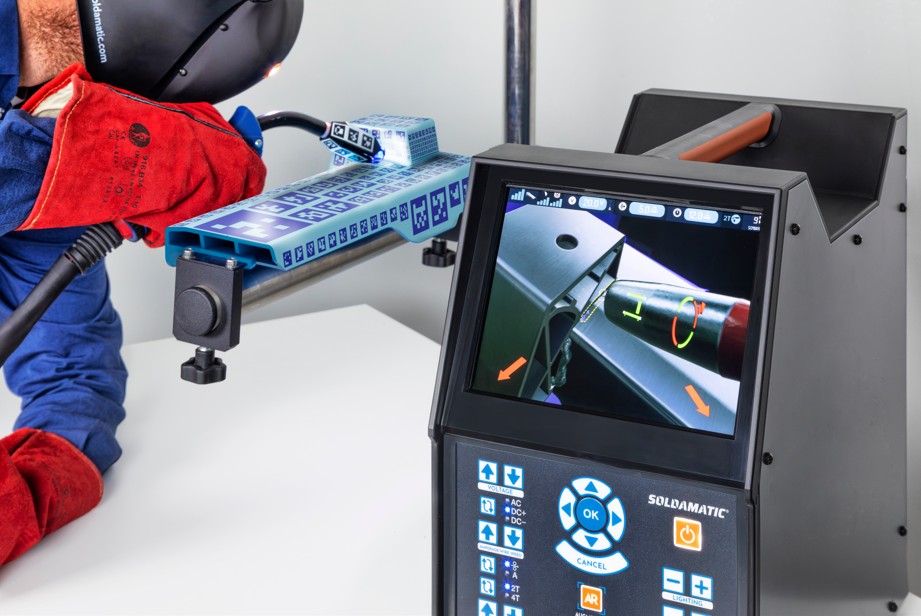
The Seabery Welding Simulator was the technological backbone of the Seabery CUP Finland. By combining real welding tools with augmented digital overlays, the system enables students to develop muscle memory in a realistic environment while receiving instant performance analysis.
Key features that supported the competition included:
Key features that supported the competition included:
- Real welding torch with authentic weight and controls
- Hyperreal augmented visualization of weld beads
- Manual skill analysis (angle, speed, distance, path)
- Adjustable welding parameters
- Gamification and ranking modules
- Detailed scoring reports
This combination of realism and analytics ensures that competitions are not only engaging but also pedagogically meaningful.
For institutions seeking to prepare students for high-level competitions such as WorldSkills, augmented reality offers a structured pathway to excellence.
The Future of Welding Competitions
The Seabery Cup demonstrates how vocational training is evolving. By integrating augmented reality into competitive formats, education providers can:
- Increase student engagement
- Raise technical standards
- Promote sustainable practices
- Bridge the gap between classroom training and industrial performance
As the demand for highly skilled welders continues to grow across sectors such as automotive, aerospace, shipbuilding, and energy, innovative training methodologies will play a decisive role.
Augmented reality welding competitions are not just a technological trend, they represent a strategic shift toward measurable, scalable, and future-ready skills development.
A Digital Step Forward in Welding Excellence
The Seabery Cup successfully showcased how augmented reality can redefine welding competitions. By combining realistic simulation, objective scoring, and competitive spirit, the event highlighted the immense potential of digital training environments.
As AR-based competitions gain recognition worldwide, they are positioning themselves as a powerful complement to traditional welding contests, preparing the next generation of welders for both national and international excellence.
The future of welding skills development is not only about sparks and steel , it is also about data, precision, and innovation.
Would you like to book a free online demo?
If you are interested in experiencing first-hand the power of Seabery Welding Simulator, we invite you to complete our form to request a personalized demo – contact us now to explore the possibilities Seabery can offer your company or training center!