





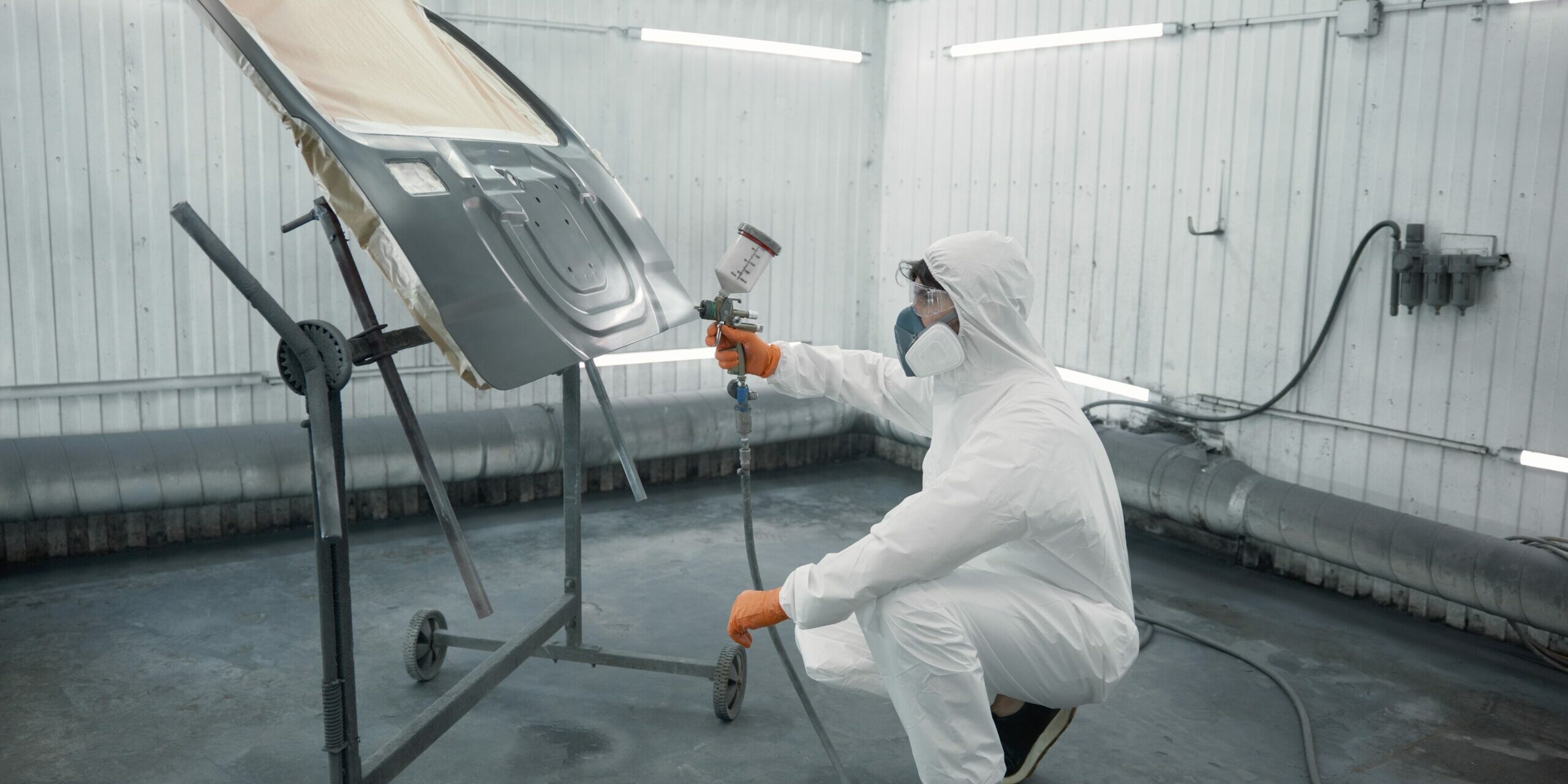
Spray painting is one of the most widely used coating techniques in industries such as automotive manufacturing, metal fabrication, aerospace, furniture production, and construction. The process allows professionals to apply coatings quickly and evenly, producing smooth and durable finishes that are difficult to achieve using traditional brushes or rollers.
However, achieving consistent results in spray painting depends not only on the painter’s skill but also on the spray painting equipment used during the process. The right tools help ensure uniform coverage, proper paint transfer, and optimal coating thickness. At the same time, professional equipment contributes to improved safety, reduced waste, and better environmental performance.
Understanding the essential components of a spray painting setup is crucial for both professionals and training institutions. From spray guns and compressors to spray booths and protective equipment, each piece plays a key role in achieving high-quality finishes.
This guide explores the most important spray painting equipment used in industrial environments, explaining how each component contributes to professional painting results and effective training.
Essential Spray Painting Equipment
Professional spray painting requires several key tools that work together to ensure precision, efficiency, and safety.
Spray Guns
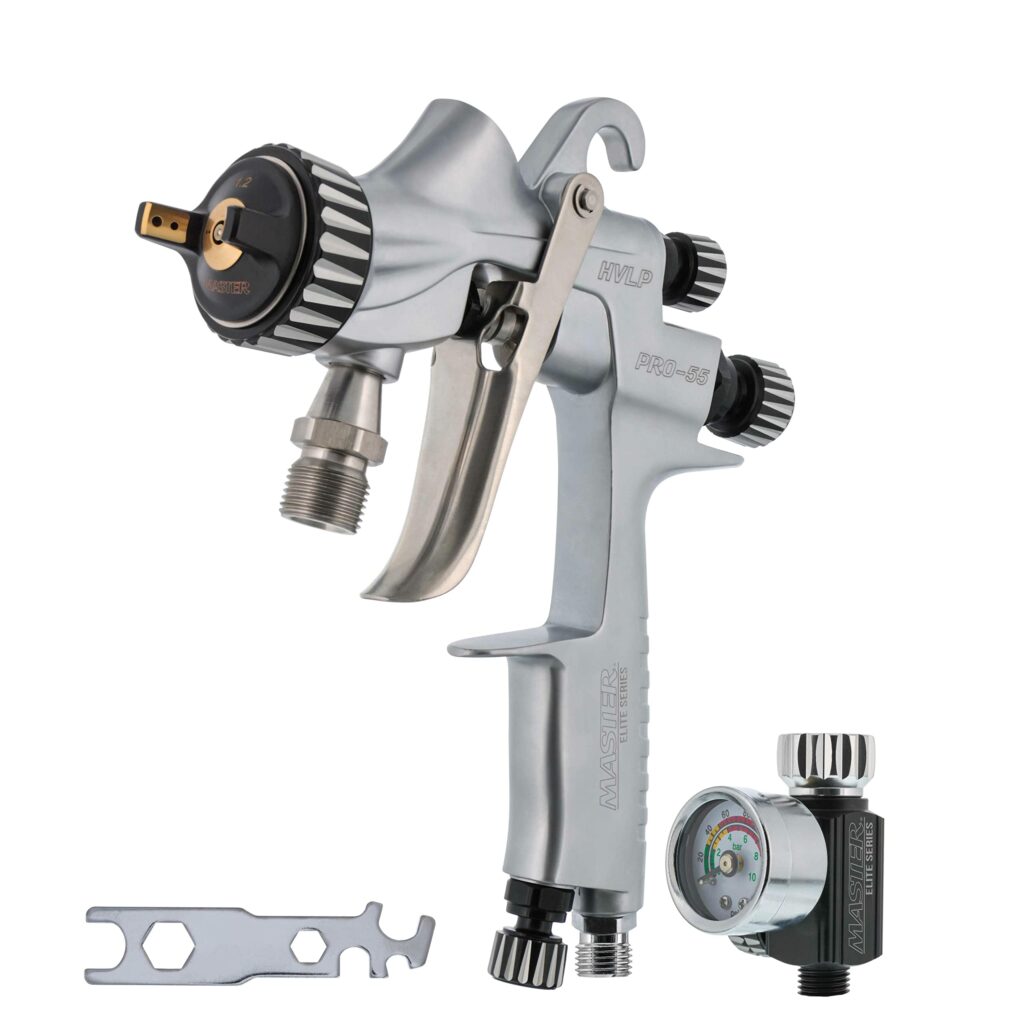
The spray gun is the core tool of any spray painting operation. It atomizes liquid paint into fine droplets and distributes them across the surface being coated.
The most common types of spray guns include:
- HVLP (High Volume Low Pressure) spray guns, which improve transfer efficiency and reduce overspray
- Airless spray guns, which atomize paint using high pressure instead of compressed air
- Airmix systems, combining airless pressure with controlled airflow for a finer finish
Each system is designed for different types of coatings and industrial applications. Proper adjustment of the spray gun’s fan pattern, fluid flow, and air pressure is essential to ensure consistent paint application.
Air Compressors and Air Supply Systems
Compressed air is fundamental for many spray painting systems. A stable air supply ensures consistent atomization and prevents variations in spray pattern.
Typical air supply systems include:
- Industrial air compressors
- Pressure regulators
- Moisture traps and filters
- Air hoses and connectors
Without proper filtration, moisture or oil contamination in the air can cause coating defects such as fisheyes or poor adhesion.
Spray Booths and Ventilation Systems
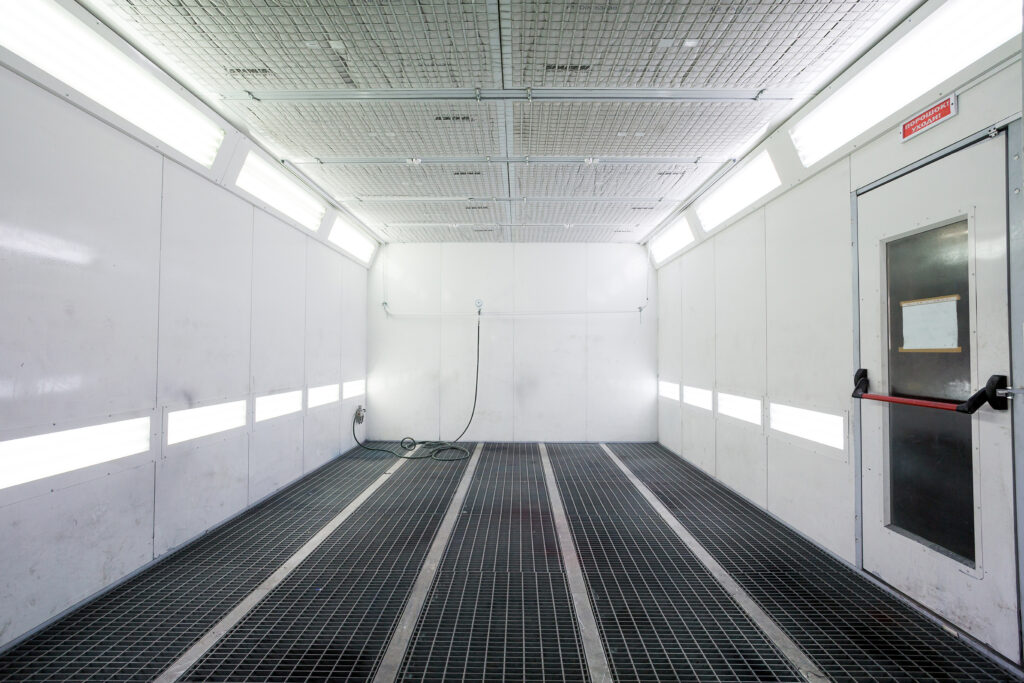
Spray booths provide a controlled environment where coatings can be applied safely and consistently. These enclosed systems manage airflow, remove overspray particles, and maintain proper working conditions.
A professional spray booth typically includes:
- Air filtration systems
- Controlled airflow
- Overspray capture filters
- Explosion-proof lighting
- Temperature and humidity control
Proper ventilation is essential to protect workers and ensure a clean coating environment.
Personal Protective Equipment (PPE)
Spray painting often involves chemicals and solvents that can be hazardous if inhaled or exposed to skin. For this reason, personal protective equipment (PPE) is a fundamental part of spray painting equipment.
Common PPE used in painting operations includes:
- Respirators or air-fed masks
- Protective suits
- Gloves
- Safety goggles or face shields
Using proper PPE helps protect workers from harmful fumes, paint particles, and chemical exposure.
Workstands and Workpiece Fixtures
Another essential but often overlooked element is the system used to hold and position parts during painting.
- Workstands and fixtures allow painters to:
- Maintain the correct spray distance
- Keep the correct spray angle
- Move smoothly around the workpiece
Proper positioning improves ergonomics and ensures more uniform paint coverage.
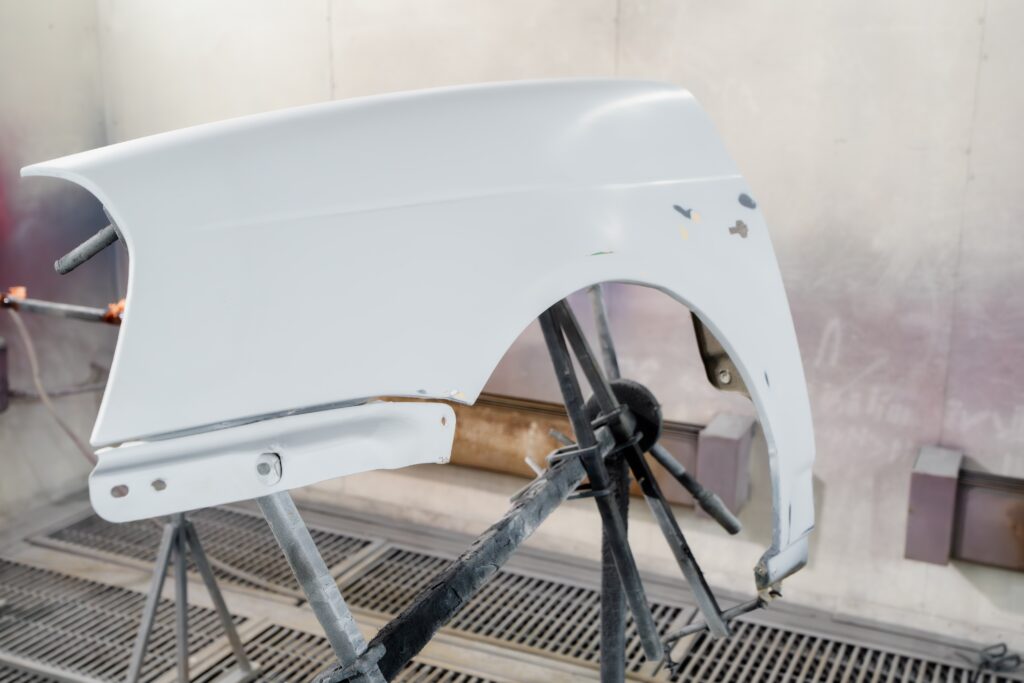
Summary of Essential Spray Painting Equipment
| Equipment | Function | Impact on Quality |
| Spray Gun | Atomizes and distributes paint | Determines spray pattern and finish consistency |
| Air Compressor System | Provides pressurized air | Ensures stable atomization |
| Spray Booth | Controls airflow and environment | Prevents contamination and overspray |
| PPE | Protects workers from chemicals | Ensures safe working conditions |
| Workstands & Fixtures | Hold parts during painting | Improves application accuracy |
Together, these tools create the foundation for professional spray painting operations.
Proper positioning improves ergonomics and ensures more uniform paint coverage.
Training Challenges in Spray Painting
Spray painting is a manual skill, meaning that mastering it requires physical practice and repetition. Painters must learn to control several parameters simultaneously:
- Spray distance
- Spray angle
- Movement speed
- Overlapping passes
Small mistakes in any of these variables can lead to coating defects such as uneven coverage, sagging, or orange peel.
Traditional training methods often involve practicing directly with real paint in spray booths. While effective, this approach presents several challenges:
- High consumption of paint and materials
- Environmental impact due to VOC emissions
- Safety risks for inexperienced trainees
- Limited training time due to costs
These limitations make it difficult for training centers and companies to provide sufficient hands-on practice.
Training with Real Equipment: The Seabery Spray Painting Simulator
An effective spray painting training environment should replicate the same conditions and tools used in real industrial workshops. Painters need to train with real equipment, such as spray guns, protective gear, and workpieces, in order to develop proper posture, movement control, and muscle memory.
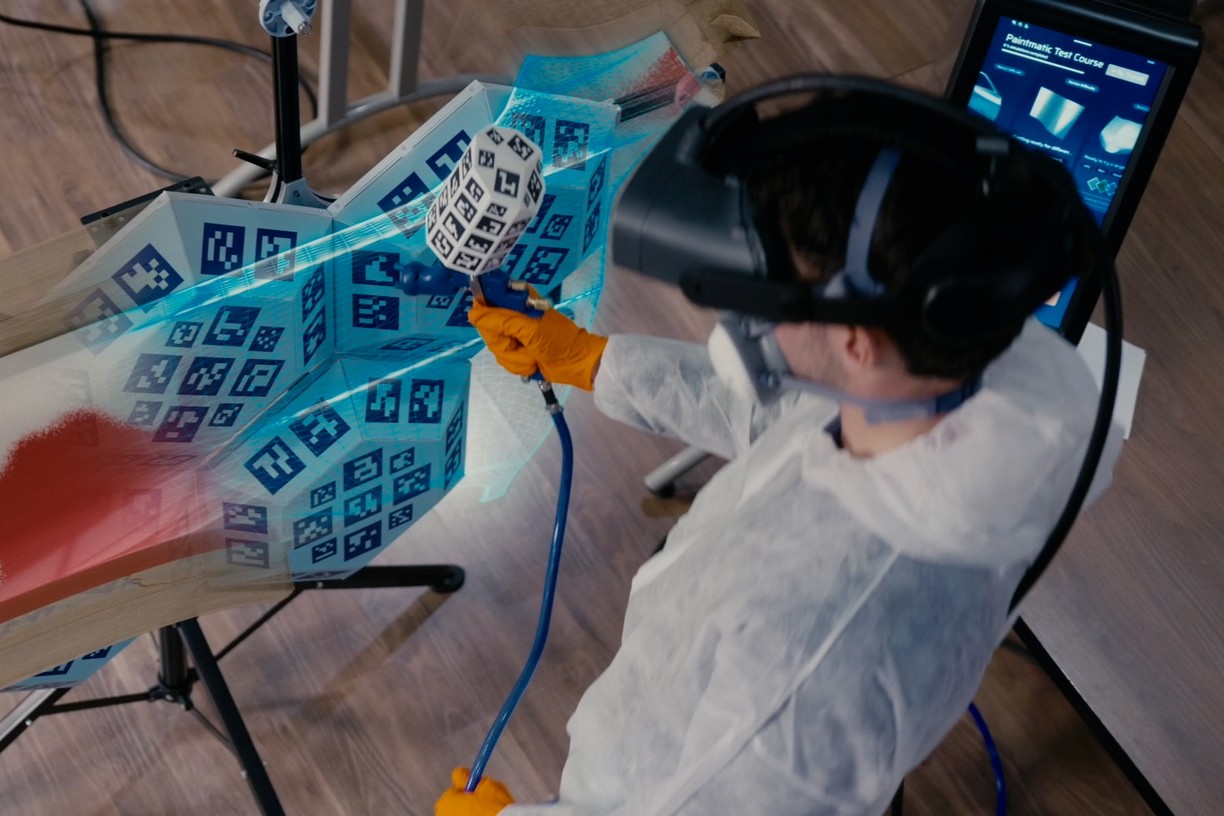
The Seabery Spray Painting Simulator follows this same principle. Instead of replacing physical tools with purely virtual controllers, the system integrates real spray painting equipment with augmented reality technology, allowing trainees to practice realistic movements while receiving digital feedback.
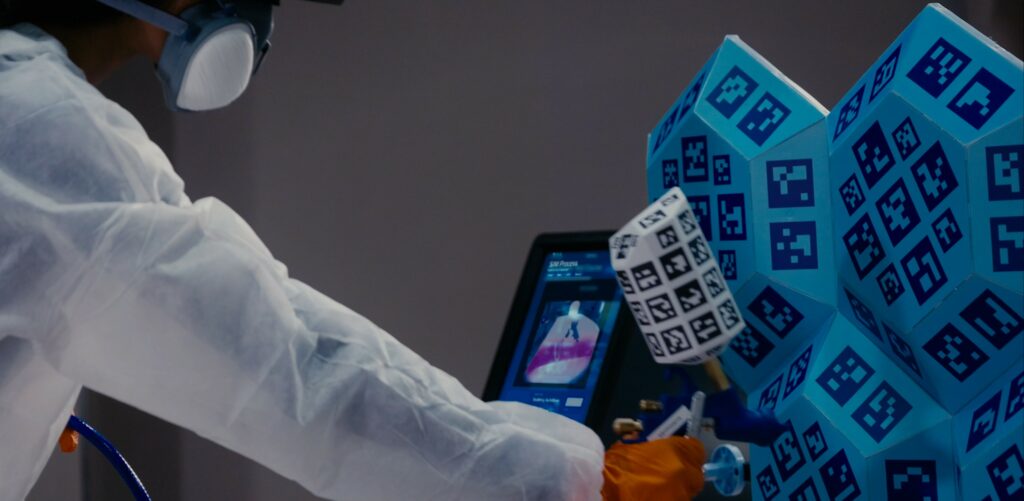
The training platform includes several components similar to those used in real spray painting environments:
- Realistic spray painting gun with authentic weight and controls
- Authentic PPE used during painting exercises
- Workstand with modular training parts (ModulAR coupons) that simulate real workpieces
- Augmented reality stereovision headset that overlays digital guidance on the real environment
- ATHP training platform for managing exercises and courses
These components recreate the physical experience of spray painting while enabling digital analysis of the trainee’s performance. According to the simulator documentation, the system uses real spray guns with real weight and controls, authentic PPE, and industry-based parts, allowing users to practice with equipment similar to that used in professional workshops.
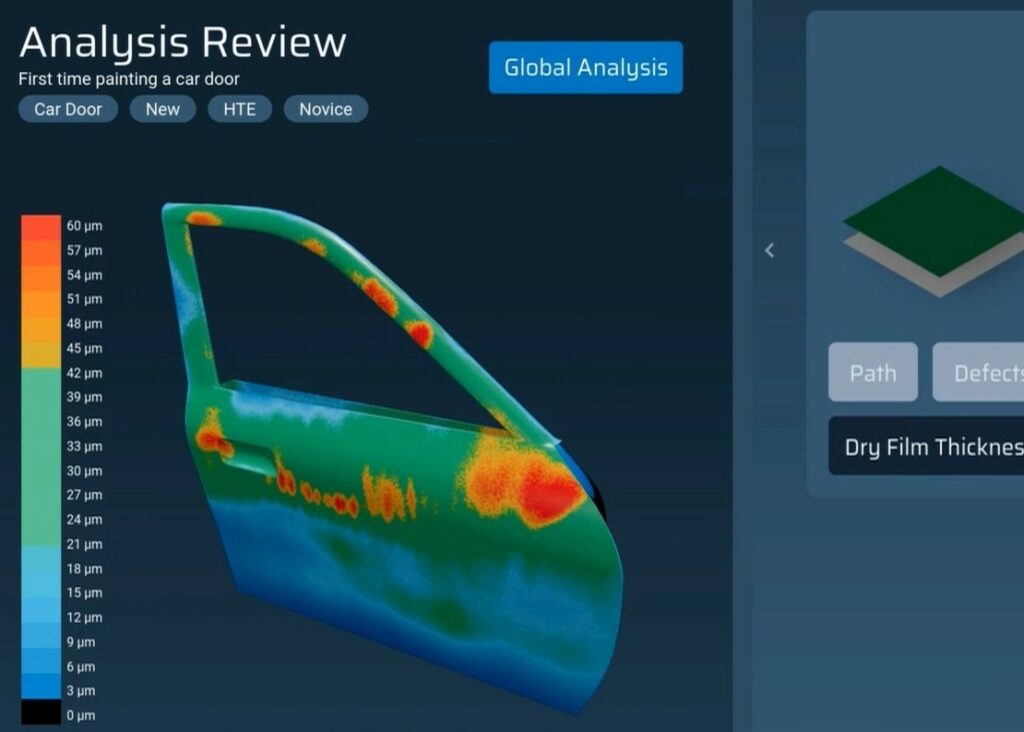
During exercises, trainees receive visual guides that help them maintain the correct distance, angle, and movement speed while applying the coating. The system also analyzes the simulated paint layer, providing metrics such as:
- Dry film thickness
- Coverage and transfer efficiency
- Paint consumption
- Defects like orange peel and sagging
Because the simulator combines real equipment with augmented reality visualization, students can practice repeatedly without consuming paint or generating emissions. This allows training centers and companies to provide more practice hours while reducing costs and environmental impact.
The result is a learning environment where trainees develop real spray painting skills before transitioning to actual coating operations.
The Future of Spray Painting Training
Spray painting equipment plays a fundamental role in achieving high-quality coating results. From spray guns and compressors to spray booths and protective gear, every component contributes to a safe and efficient painting process.
At the same time, the industry is evolving toward more efficient and sustainable training methods. Technologies such as augmented reality simulation are making it possible to combine real equipment with digital feedback, helping trainees develop manual skills faster while reducing costs and environmental impact.
By integrating traditional tools with innovative training solutions, the next generation of painters can gain the experience they need to perform confidently in real industrial environments.
Would you like to book a free online demo?
If you are interested in experiencing first-hand the power of Seabery Spray Painting Simulator, we invite you to complete our form to request a personalized demo – contact us now to explore the possibilities Seabery can offer your company or training center!