





Robotic welding has become a key part of modern manufacturing as companies look for greater consistency, productivity, safety, and process control. In industrial environments where welding quality directly affects structural reliability, repeatability is no longer optional. Automation and digitalization are changing how welders, programmers, and production teams learn, validate, and optimize welding processes.
What is robotic welding programming?
Robotic welding programming is the process of defining how a welding robot moves, where it starts and stops, which welding parameters it uses, and how it reacts to the part, fixture, and production environment. In simple terms, the program tells the robot how to reproduce a weld with precision.
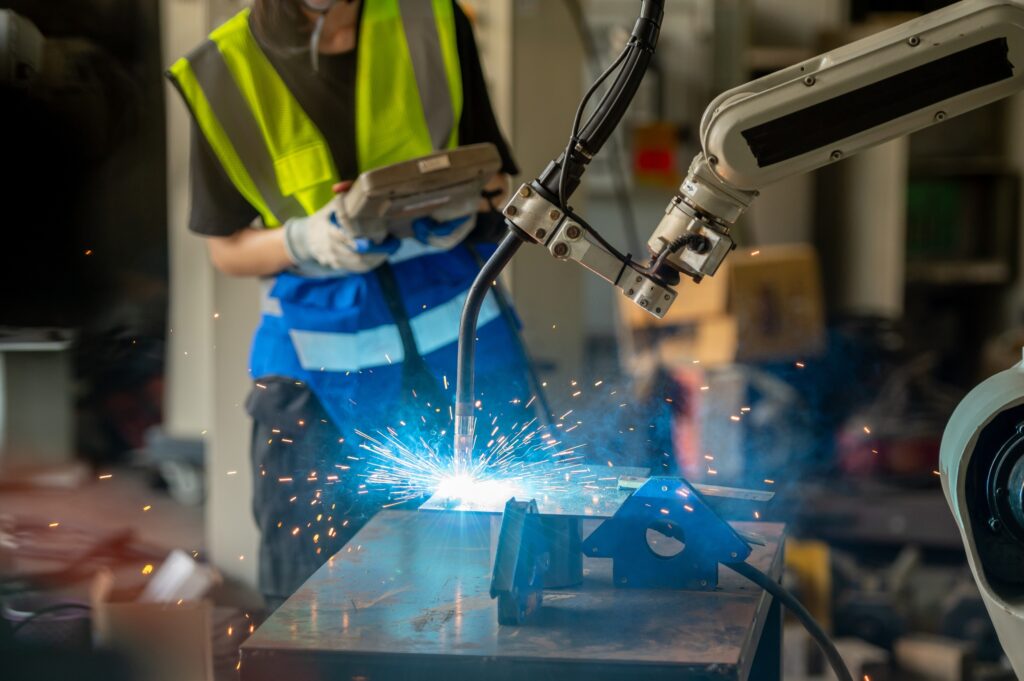
A robotic welding system normally includes the robot arm, welding power source, torch, wire feeder, fixtures, sensors, safety equipment, and software. The quality of the final weld depends not only on the robot, but also on the welding methodology behind the program: torch angle, travel speed, stick-out, arc start, arc end, weaving patterns, and joint preparation.
According to AWS, robotic welding and automation are increasingly accessible, not only for large manufacturers but also for smaller fabrication shops, thanks to easier programming, safer systems, and more flexible automation solutions.
Main programming methods
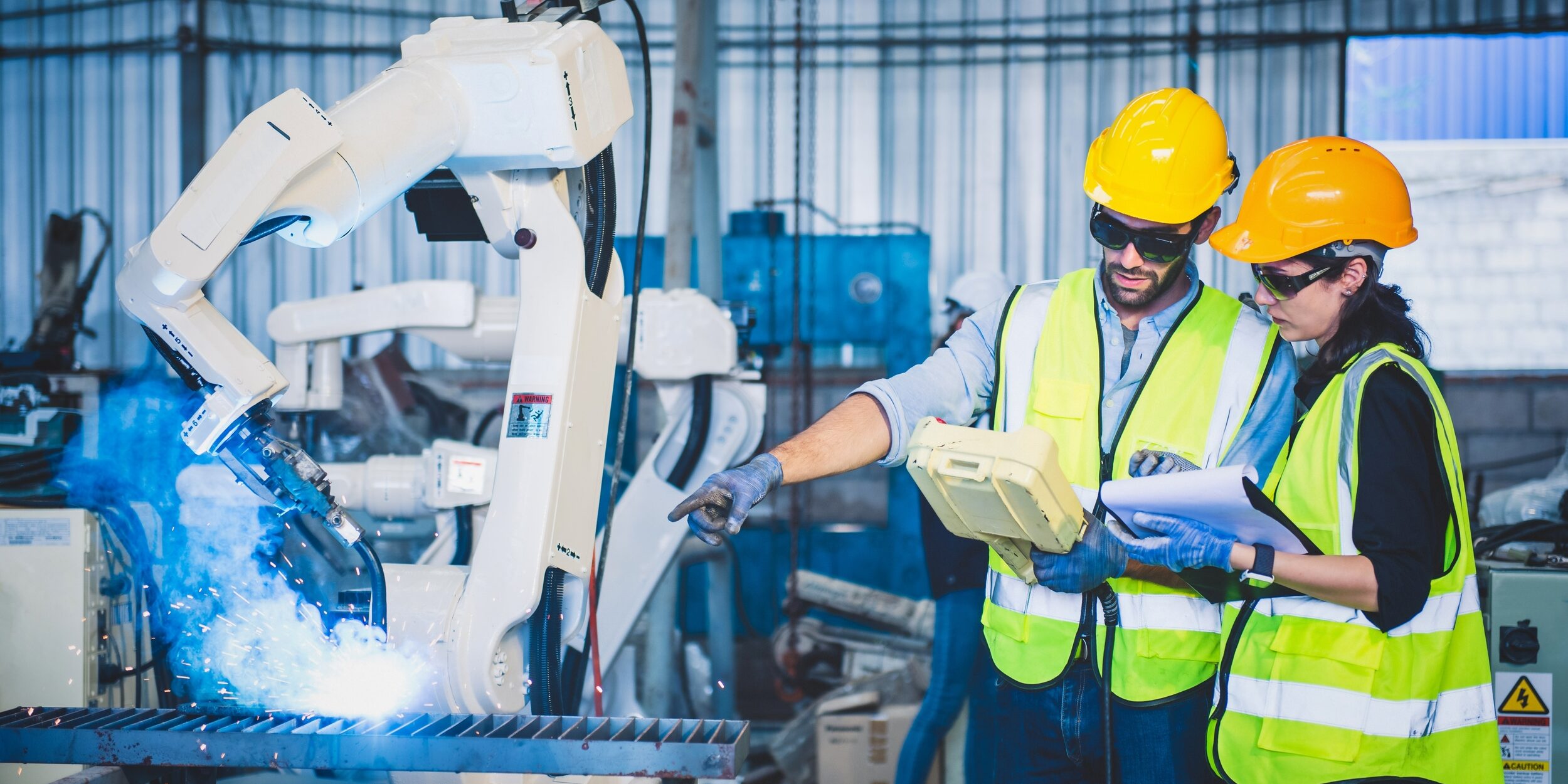
| Online programming | Usually done directly on the robot using a teach pendant.
The operator manually moves the robot to different points and records positions, speeds, and welding instructions. Teach pendants remain one of the most common tools for basic robot programming because they allow direct control of movements, torch position, and welding commands. |
| Offline programming | Also known as OLP, allows programs to be created and tested in a virtual environment before being transferred to the real robot.
This reduces production downtime because the robot can continue working while new programs are prepared. It is especially useful for short batches, complex parts, and companies that need faster changeovers. |
Basic steps in robotic welding programming
- The first step is understanding the part and the weld requirements. Before programming, the team must review drawings, joint types, material thickness, welding process, tolerances, and quality requirements. A robot can repeat a movement accurately, but it cannot compensate for poor welding methodology.
- The second step is fixture preparation. Robotic welding requires stable and repeatable part positioning. If the workpiece moves or varies from one cycle to another, even a well-programmed robot may produce inconsistent welds.
- The third step is defining the robot path. This includes approach points, weld start points, weld end points, retract movements, and safe transition paths. The programmer must avoid collisions with clamps, tables, fixtures, cables, and the part itself.
- The fourth step is setting welding parameters. These may include voltage, amperage, wire feed speed, travel speed, shielding gas, torch angle, and weaving movement. The robot repeats the weld, but the welding knowledge behind these parameters remains essential.
- The fifth step is simulation and testing. Programs should be tested at low speed, checked for collisions, and validated with trial welds. Once the weld quality is confirmed, the program can be optimized for cycle time and productivity.
Why welding knowledge still matters
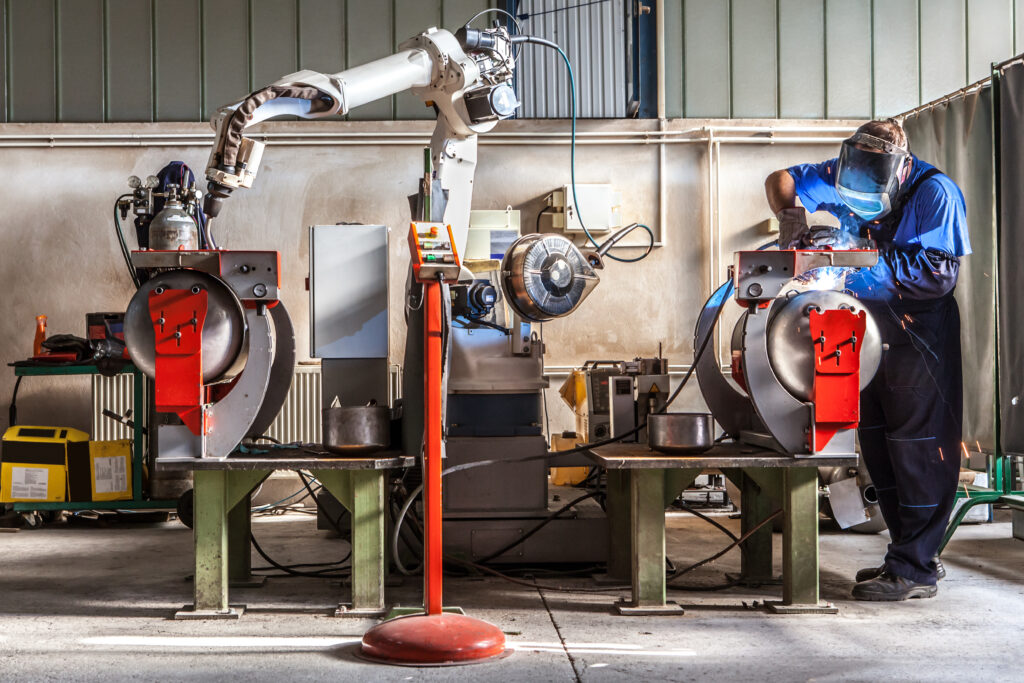
A common mistake is assuming that robotic welding programming is mainly a software task. In reality, welding knowledge is fundamental. The robot does not automatically create a good weld; it repeats the weld it has been taught. If the programmer does not understand torch angle, heat input, travel speed, or defect recognition, automation will simply repeat poor welding decisions at high speed.
This is why experienced welders are often excellent candidates for robotic welding programming. They already understand the behavior of the arc, the importance of preparation, and the difference between a technically acceptable weld and a defective one. With the right digital training, they can transfer this knowledge into automated processes.
Common challenges in robotic welding readiness
One challenge is part variability. Robotic welding works best when parts are consistent. Poor fit-up, inaccurate cutting, or unstable fixtures can make programming difficult.
Safety is another essential element. Industrial robots operate with speed, force, heat, electricity, fumes, and moving equipment. Programming must therefore consider safe zones, emergency stops, guarding, interlocks, risk assessment, and operator training.
For any company implementing robotic welding, safety should be included from the beginning of the programming methodology, not added after the cell has already been designed.
Another challenge is over-automation, because not every weld is suitable for robotic welding. Companies should evaluate volume, repeatability, part complexity, accessibility, and return on investment before automating.
One of the biggest obstacles is the shortage of skilled personnel. Companies need people who understand both welding and automation. This hybrid profile is increasingly important in modern industry. Even with advanced automation, a robotic welding cell is only as effective as the people who program, maintain, and optimize it; that is why companies must consider training.
Preparing industry for automated welding environments
Digitalization is transforming robotic welding training and programming. Instead of relying only on trial-and-error in the workshop, companies can now use simulation, data analysis, virtual environments, and Augmented Reality to prepare workers before they interact with real equipment.
Digital tools help operators understand the relationship between movement, parameters, technique, and weld quality. They also support objective assessment, allowing trainers and managers to identify performance gaps and improve methodology. This is especially valuable in industrial welding because errors can be costly.
How Seabery bridges robotic welding training and automation
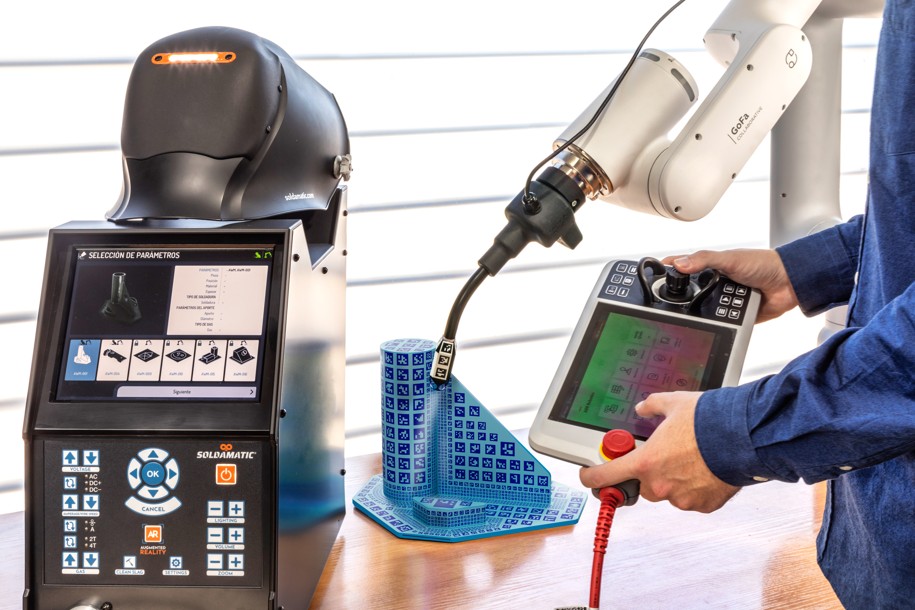
Seabery’s solution helps training centers and industrial companies build the welding skills needed before moving into advanced automation and robotic welding environments. Seabery Robotics allows learners to practice welding methodology in a safe, repeatable, and measurable way through Augmented Reality simulation and data-based assessment.
This is highly relevant for robotic welding programming because good robot programs begin with good welding knowledge. Operators need to understand torch angle, travel speed, joint preparation, welding defects, and process parameters before they can create or validate automated welding paths. Seabery Robotic Welding Simulator supports this process while reducing material consumption, workshop risks, and training costs
Building the foundation for welding automation
Robotic welding programming is not only about moving a robot from point A to point B. It is about combining welding expertise, programming logic, safety, and industrial methodology. As automation grows, companies will need professionals who understand both the welding process and the digital tools that support it.
By strengthening welding knowledge through simulation, manufacturers and training centers can prepare workers for a more automated, efficient, and digital industrial future.
Would you like to book a free online demo?
If you are interested in experiencing first-hand the power of Seabery Robotic Welding Simulator, we invite you to complete our form to request a personalized demo – contact us now to explore the possibilities Seabery can offer your company or training center!