





For many high school students, welding may sound like a niche trade skill. In reality, it is one of the most practical ways to bring STEM to life. Welding connects science, technology, engineering, and mathematics through real-world problem-solving: students learn how heat affects metal, how angles and joint types change structural strength, and how precision, measurement, and process control influence results. That makes welding much more than a shop activity. It can be an accessible entry point into advanced manufacturing, engineering pathways, and technical careers.
As schools look for more engaging ways to introduce STEM, welding stands out because it turns abstract concepts into visible outcomes. A student can calculate, test, adjust, and immediately see whether a weld is sound or flawed. That direct feedback is one of the reasons applied STEM and career-focused learning can improve engagement and career awareness in high school settings. The U.S. Department of Education highlights STEM as a national priority, while research from the Institute of Education Sciences points to the value of applied STEM career and technical education in connecting academic learning with hands-on skills (U). Meanwhile, the American Welding Society continues to promote welding as a strong career pathway for students entering the workforce or pursuing further technical education .
Why welding fits naturally into STEM education
Welding is an ideal STEM subject because it combines theory and practice in a very direct way. In science, students explore heat transfer, metallurgy, oxidation, and material behavior. In technology, they work with equipment, digital interfaces, and increasingly with simulation-based training tools. In engineering, they understand joints, tolerances, structural integrity, and process design. In mathematics, they apply measurement, geometry, angles, travel speed, and repeatability.

This interdisciplinary nature matters in high school, where one of the biggest challenges is helping students understand why classroom knowledge is useful. Welding gives context to formulas and principles. Instead of learning only from diagrams or textbooks, students can experience how a change in torch angle, speed, or distance affects the final outcome.
That hands-on aspect also supports student motivation. Applied STEM learning often works well because it is active, visual, and goal-oriented. Students are not just absorbing information; they are making decisions, testing hypotheses, and improving through repetition. For teenagers who learn best by doing, welding can become a powerful discovery tool rather than an intimidating trade reserved for adults.
What high school students should learn first
A good introduction to welding at the high school level should focus on fundamentals before complexity. Students do not need to begin with advanced certifications or industrial-grade production challenges. They need a structured and safe first contact with the discipline.
| Learning area | What students explore | Why it matters in STEM |
| Safety basics | PPE, workspace awareness, responsible equipment use | Builds laboratory discipline and risk awareness |
| Welding concepts | What welding is, common processes, basic joints | Connects theory with real applications |
| Measurement and geometry | Angles, alignment, bead path, positioning | Reinforces math in a practical setting |
| Materials and behavior | How metals react to heat and joining | Introduces scientific observation |
| Process control | Speed, distance, consistency, sequence | Develops precision and problem-solving |
| Evaluation | Identifying strong vs. weak welds | Encourages analysis and iterative improvement |
This foundation helps students build confidence without overwhelming them. It also gives schools flexibility: a STEM class may use welding as a project-based learning module, while a career and technical education program may use it as a starting point for future specialization.
The challenge: making welding accessible in high school
Despite its educational value, welding can be difficult for schools to implement at scale. Traditional training requires dedicated space, consumables, safety controls, equipment investment, and instructor oversight. For younger students, especially those in general STEM programs rather than specialized vocational tracks, those barriers can slow adoption.
That is why many educators are rethinking how welding is introduced. The first goal in high school is often not to reproduce a full industrial welding booth from day one. It is to spark interest, teach core concepts, and develop safe manual habits. Once students are engaged, schools can decide whether to expand into more advanced hands-on pathways.
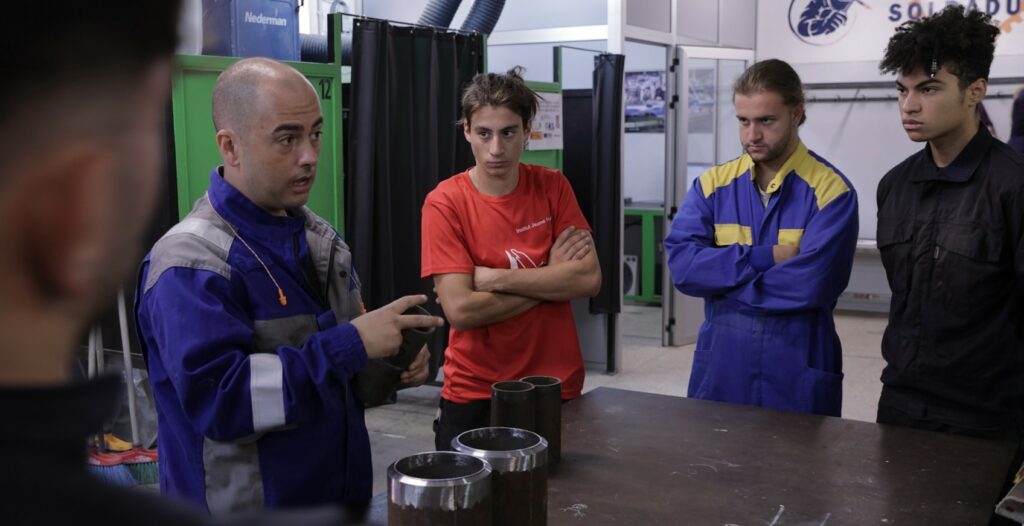
This approach also aligns with broader workforce needs. According to the U.S. Bureau of Labor Statistics, welders are expected to have about 45,600 openings per year on average in the United States over the 2024–2034 period, largely due to replacement needs and ongoing demand across sectors. That makes early exposure especially relevant for schools that want to connect STEM education with career readiness.
Why technology is changing the way students start welding
Technology is making entry-level welding education more flexible, more engaging, and more scalable. In particular, digital tools and simulation can help students understand movement, sequencing, and technique before they work in more demanding physical training environments.
For high school students, this matters because early learning is often about repetition and feedback. They need a way to practice core motions, understand positioning, and visualize mistakes. Technology-based STEM instruction supports exactly that kind of learning. It can turn welding into a more approachable educational experience by combining physical action with guided digital feedback.
This is especially valuable in schools that want to introduce welding within STEM, makerspace, or technical exploration programs. Rather than treating welding as something students encounter only at the end of a pathway, schools can present it earlier as a modern, technology-rich field linked to engineering, manufacturing, robotics, and design.
Seabery STEM Welding: a modern way to introduce welding to high school students
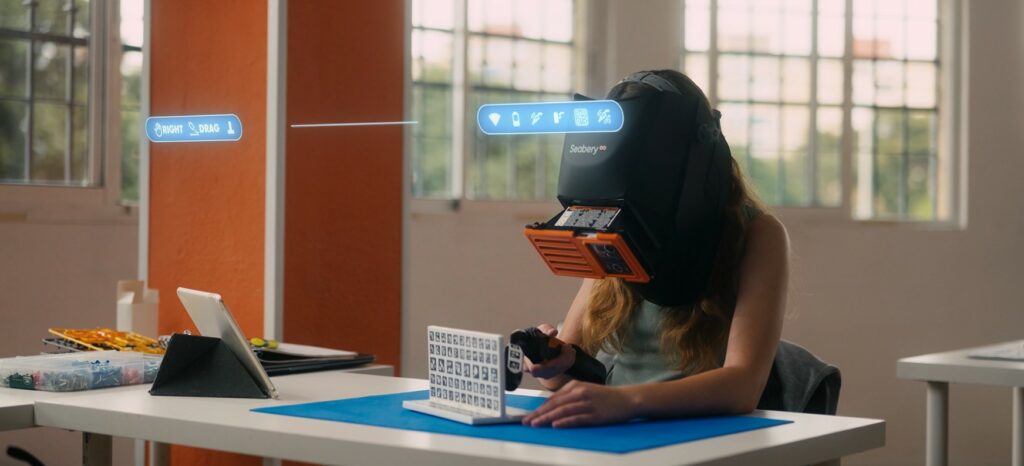
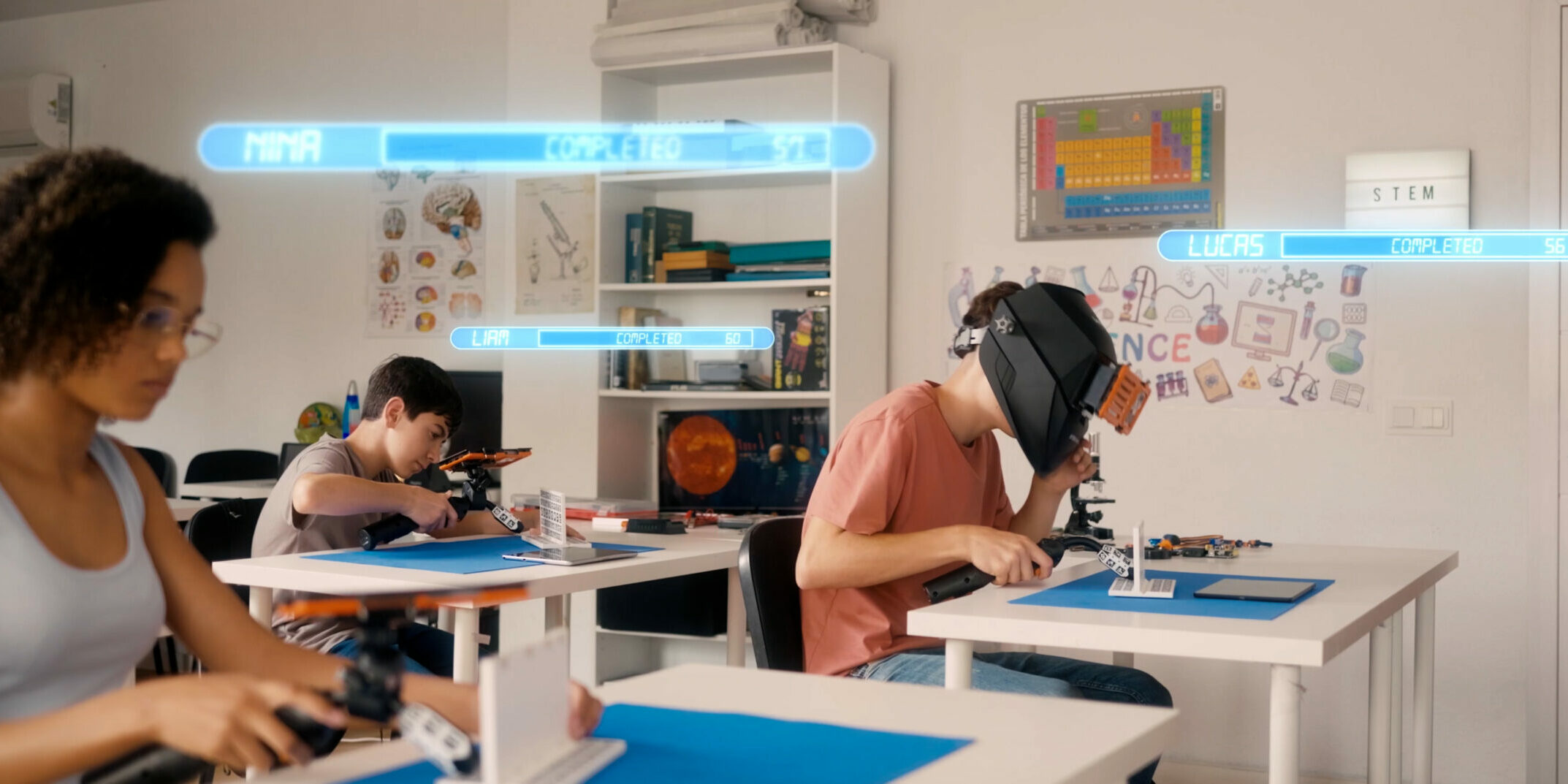
A strong example of this approach is Seabery STEM Welding, Seabery’s augmented reality welding solution created specifically for middle and high school students. According to Seabery’s official product information, it is designed for learners roughly aged 10 to 16 and aims to make welding safe, engaging, and easy to understand in STEM and technical education settings.
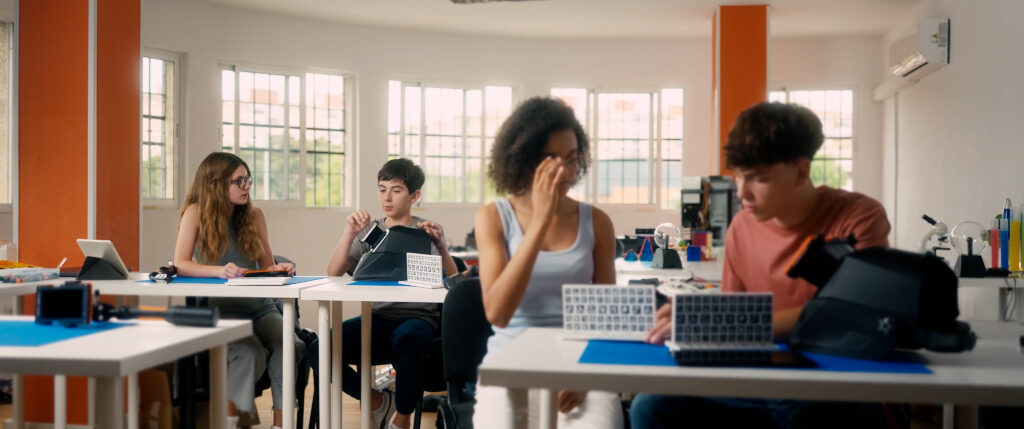
What makes Seabery STEM Welding especially relevant for schools is its educational focus. Instead of presenting welding as a complex industrial process from the start, it introduces the discipline through a guided, visual, and interactive experience. Students can practice real movements, follow feedback, and begin understanding welding logic in a format that feels approachable. This lowers the barrier to entry for younger learners and helps teachers integrate welding into broader STEM activities.
It also fits the direction many schools are already taking: more experiential learning, more educational technology, and more career-connected classroom experiences. For a high school that wants to inspire interest in skilled trades while still keeping a strong STEM identity, Seabery STEM Welding offers a practical bridge between academic learning and technical exploration. In that sense, it is not only a simulator. It is a way to help students discover that welding can be creative, analytical, and future-oriented.
Opening the door to future skills
Welding can be an excellent starting point for high school students because it makes STEM tangible. It teaches precision, discipline, and problem-solving while also exposing students to real career possibilities. With the support of modern educational technology, schools no longer need to treat welding as an inaccessible subject. They can introduce it earlier, more safely, and in a way that genuinely connects with today’s learners.
Would you like to book a free online demo?
If you are interested in experiencing first-hand the power of Seabery STEM Welding, we invite you to complete our form to request a personalized demo – contact us now to explore the possibilities Seabery can offer your company or training center!