





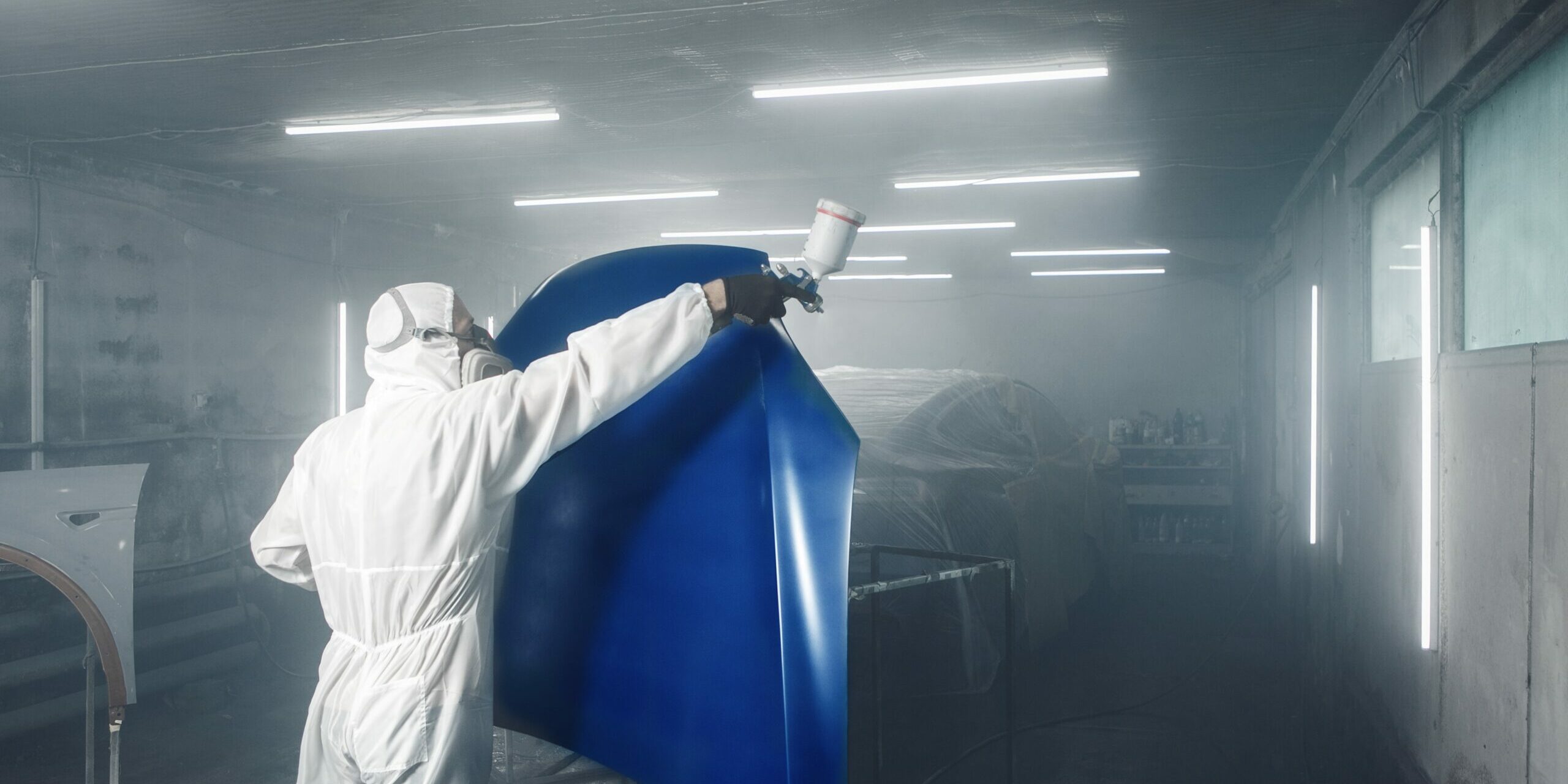
Automotive spray painting is one of the most demanding manual skills in the automotive industry. Whether in OEM production lines or collision repair workshops, achieving a flawless and durable finish requires precision, consistency, and technical expertise. Beyond aesthetics, paint quality protects vehicles from corrosion, environmental exposure, and long-term wear.
Today, automotive spray painting must also comply with strict environmental and safety standards. Emissions control, proper ventilation, and safe handling of materials are essential components of modern refinishing operations. As quality expectations continue to rise, mastering best practices is critical, not only for visual results but also for efficiency, sustainability, and regulatory compliance.
The Core of Automotive Spray Painting
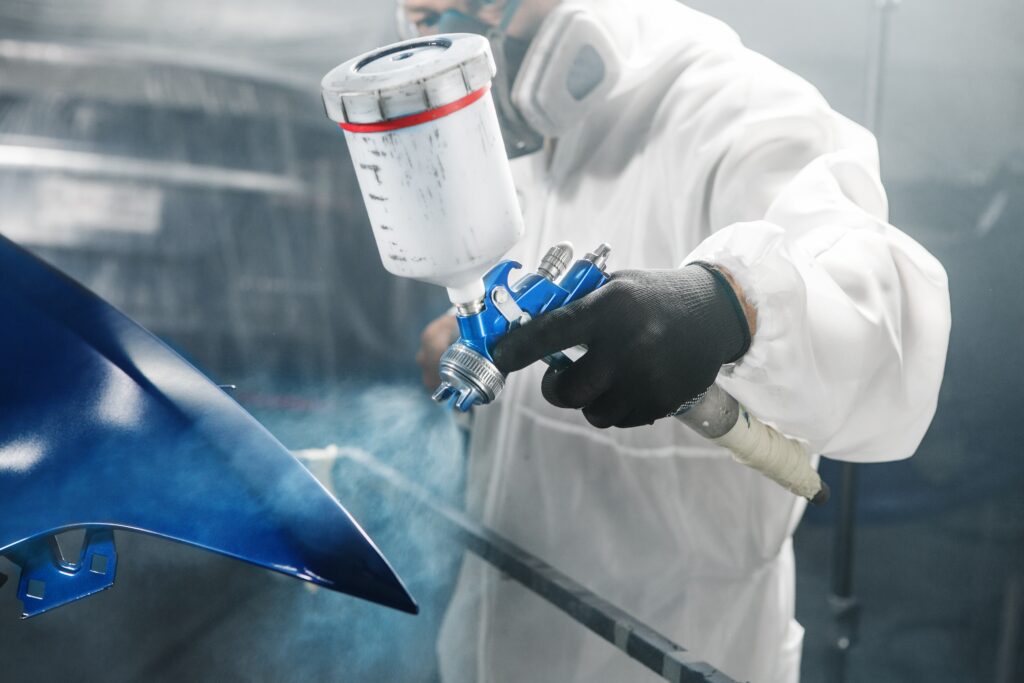
Automotive spray painting typically involves applying primer, basecoat, and clearcoat using professional systems such as HVLP or HTE spray guns. While the equipment is advanced, the outcome ultimately depends on the painter’s manual control.
High-quality finishes rely on:
- Consistent spray distance
- Correct spray angle (perpendicular to the surface)
- Steady movement speed
- Proper overlap between passes
- Controlled air pressure and fluid flow
Precision in these variables ensures uniform coating, correct film thickness, and minimal defects.
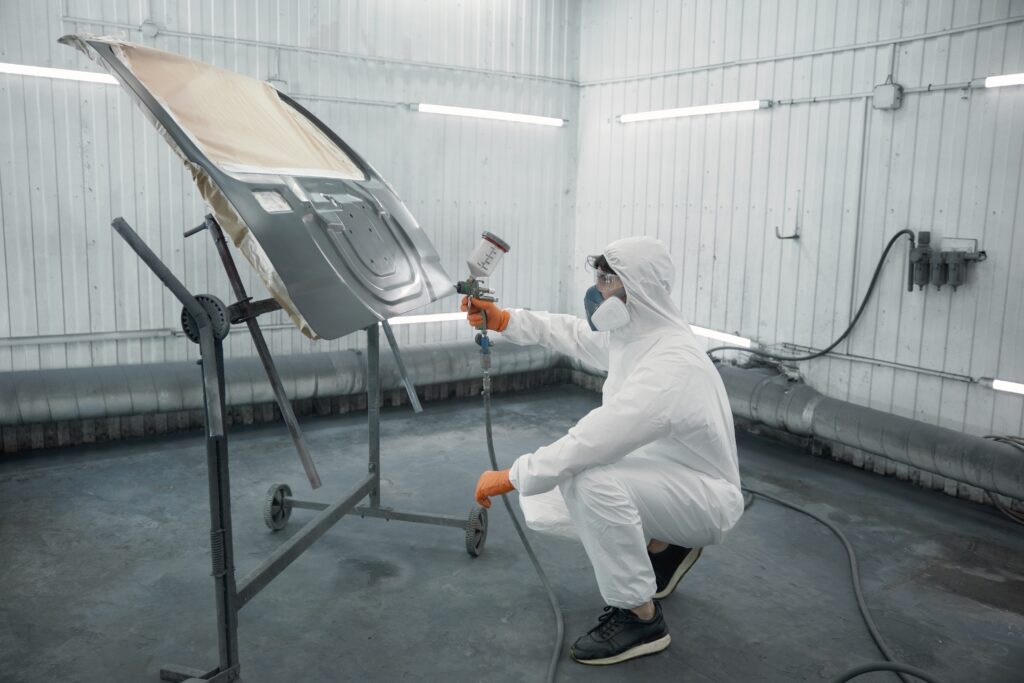
Best Practices in Automotive Spray Painting
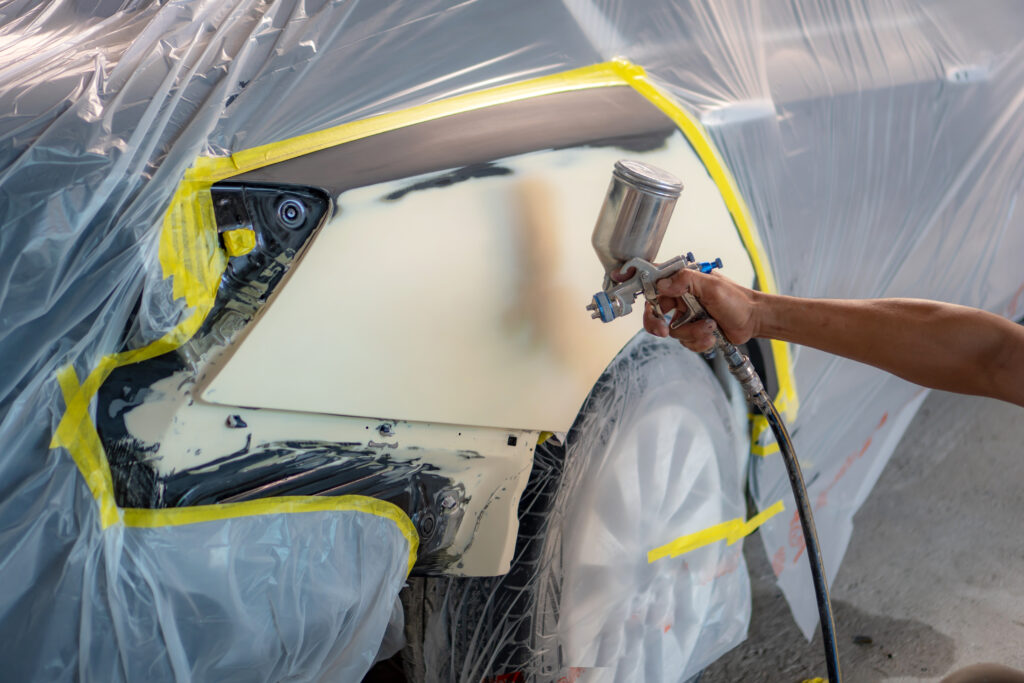
1. Surface Preparation: The Foundation of Quality
A perfect finish begins long before the first coat of paint. Surface preparation is often the determining factor in overall quality.
Key steps include:
- Thorough cleaning and degreasing
- Proper sanding according to coating system requirements
- Careful masking to avoid contamination
- Controlled booth environment (temperature and humidity)
- Poor preparation can lead to adhesion problems, fish eyes, and premature coating failure.
2. Control of Distance, Angle, and Speed
Spray technique directly impacts coating performance. The most critical variables in automotive spray painting are distance, angle, and speed.
| Parameter | Recommended Practice | Risk if Incorrect |
| Distance to surface | Approx. 15–20 cm | Too close: sagging; Too far: dry spray |
| Spray angle | 90° (perpendicular) | Uneven film thickness |
| Movement speed | Constant and controlled | Orange peel or patchy coverage |
| Overlap | 60–70% per pass | Striping or poor coverage |
Maintaining consistent movement and alignment ensures uniform coverage and prevents common defects such as orange peel and sagging.
3. Proper Equipment Handling
In automotive spray painting, equipment setup is just as important as technique. Even skilled painters can produce inconsistent results if spray guns are not correctly calibrated or maintained.
Most refinishing professionals work with HVLP (High Volume Low Pressure) or HTE systems. Most professional painters use HVLP spray gun technology to improve transfer efficiency and reduce overspray, helping minimize material waste and ensure more uniform coverage.
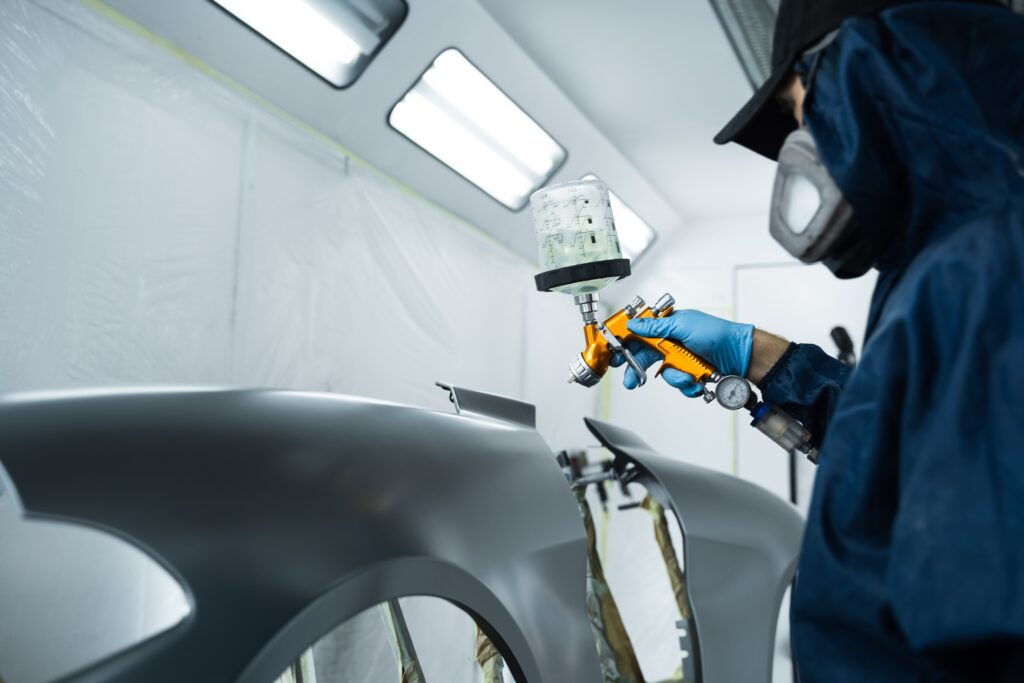
Professional spray guns allow control of:
- Fluid flow
- Fan width
- Air pressure
- Two-stage trigger release
Correct adjustment ensures proper atomization, which directly impacts surface finish and defect prevention. Excess pressure can cause overspray, while insufficient pressure may lead to poor coverage or orange peel.
Regular cleaning, pressure checks, and spray pattern testing are essential best practices to guarantee consistent, high-quality automotive spray painting results.
4. Monitoring Dry Film Thickness
Dry film thickness (DFT) plays a crucial role in durability, gloss retention, and corrosion resistance. Too much material can cause cracking or solvent entrapment; too little can compromise protection.
Professional painters measure and analyze DFT to verify compliance with manufacturer specifications. Advanced training environments now incorporate real-time film thickness analysis, allowing trainees to understand how technique directly influences coating build.
5. Identifying and Preventing Defects
Defect detection is a critical skill in automotive spray painting. Common issues include:
- Orange peel: uneven texture due to improper atomization or speed
- Sagging (runs): excessive paint accumulation
- Dry spray: rough finish from excessive distance
- Poor coverage: insufficient overlap
Understanding the root cause of each defect enables painters to adjust pressure, distance, and movement accordingly.
Challenges of Traditional Training
Traditional spray painting training presents several challenges:
- High material costs
- Consumption of paints and consumables
- Environmental impact from VOC emissions
- Risk exposure to chemicals
- Limited opportunities for repetitive practice
Digitalization has emerged as a highly efficient method for upskilling industrial workers. By integrating real tools with digital feedback, training can become safer, more sustainable, and more scalable.
Augmented Reality in Automotive Spray Painting Training
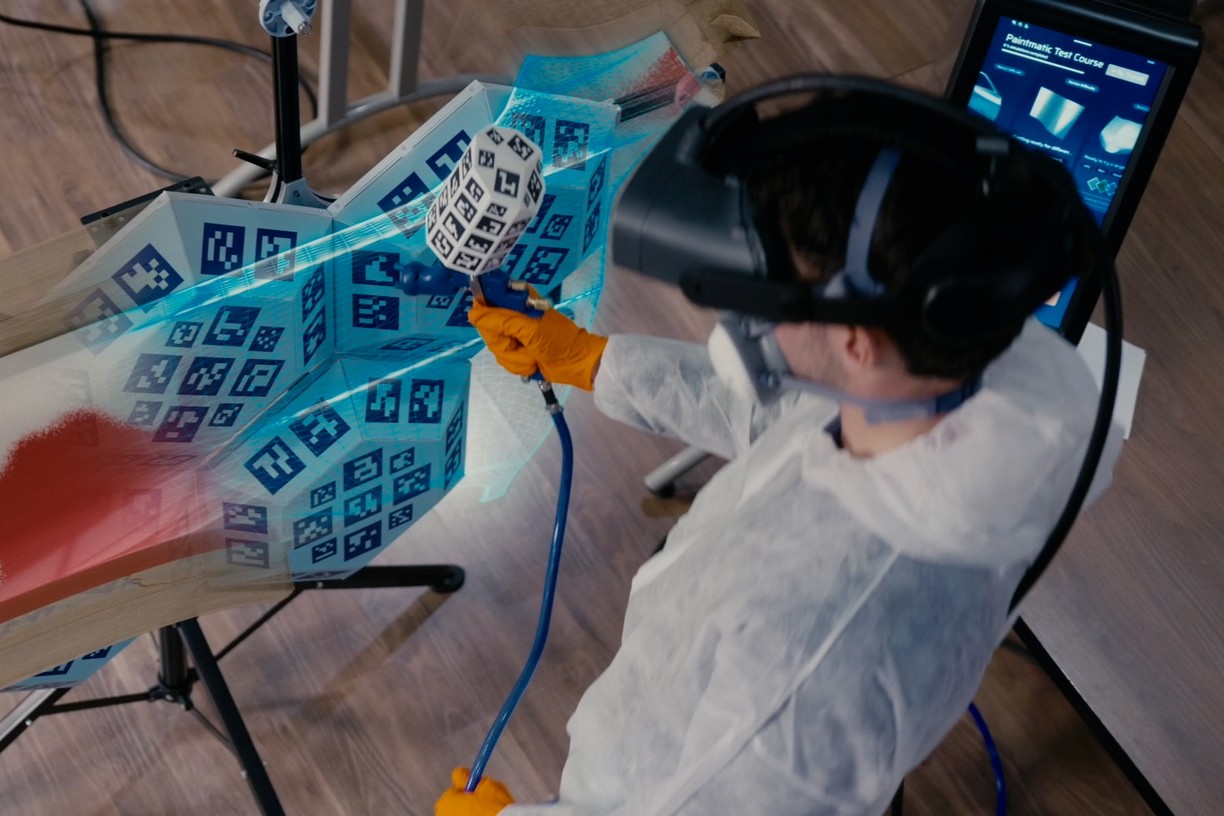
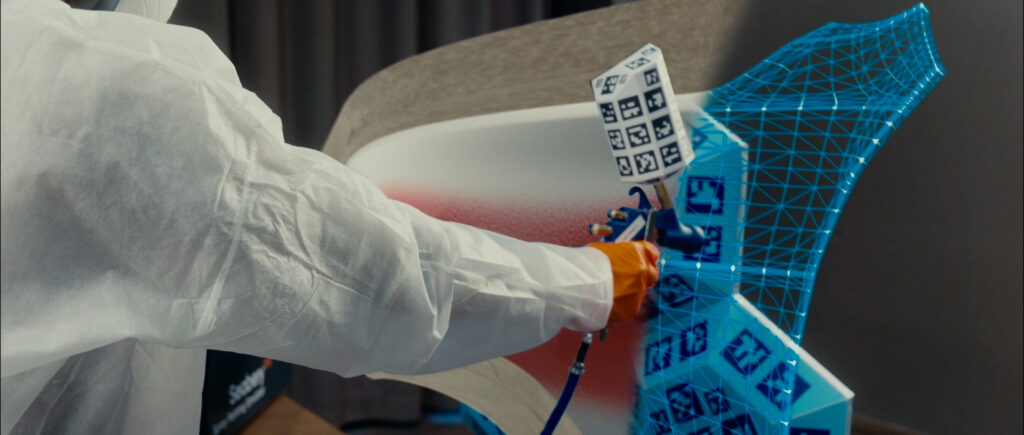
Manual skills require real movement in real environments. Augmented reality (AR) allows trainees to practice with authentic spray guns and physical components while receiving digital overlays and performance analytics.
Modern AR-based spray painting training systems integrate:
- Stereoscopic augmented reality with depth perception
- Real spray guns with authentic controls and weight
- HD sound feedback
- Hyperreal graphics for coating simulation
- Visual guides for distance, angle, and speed
- Real-time defect detection (orange peel and sagging)
- Dry film thickness analysis
- Manual skill scoring based on angle, speed, distance, and path
These systems also support structured course management, enabling instructors to create exercises, select workpieces (including automotive parts like hoods and doors), adjust paint types (solid or metallic), and define difficulty levels.
How Seabery Supports Automotive Spray Painting Excellence
Seabery’s Spray Painting Simulator is designed to replicate real industrial spray painting conditions in a safe and controlled augmented reality environment.
The solution combines:
- Authentic PPE integration
- Real spray guns with realistic weight and controls
- Modular training parts commonly used in the automotive industry
- Parametrized control of pressure, distance, and angle
- Detailed coating quality analysis
- Defect visualization and highlighting
- LMS connectivity for course and student management
By simulating real-world painting processes with high realism, based on advanced rendering technologies and real testing, Seabery enables intensive, repeatable practice without material waste or environmental impact.
The result is accelerated skill acquisition, objective performance evaluation, and improved readiness for real automotive painting applications.
Driving the Future of Automotive Spray Painting
Automotive spray painting is evolving. As quality standards rise and sustainability becomes a priority, training methods must also adapt.
By combining best practices—surface preparation, controlled technique, film thickness management, and defect prevention, with advanced augmented reality simulation, the industry can train painters more efficiently and safely than ever before.
The future of automotive spray painting lies in precision, digitalization, and data-driven skill development, ensuring that every coat meets the highest standards of quality and performance.
Would you like to book a free online demo?
If you are interested in experiencing first-hand the power of Seabery Spray Painting Simulator, we invite you to complete our form to request a personalized demo – contact us now to explore the possibilities Seabery can offer your company or training center!