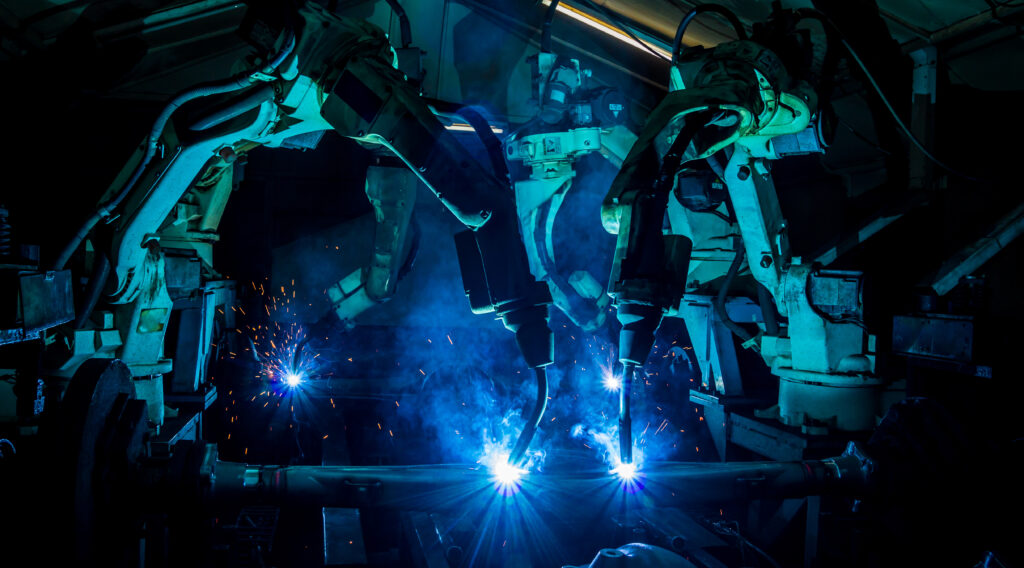
Understanding Arc Welding Robots

The advent of arc welding robots has addressed challenges associated with manual welding, such as inconsistencies, safety hazards, and labor shortages. With increasing automation and digitalization, integrating cutting-edge technology into welding operations has become vital for industries aiming to improve productivity and quality.

Read in this article how these robots not only optimize welding tasks but also ensure consistency and repeatability, making them indispensable in industrial applications.

Key components of arc welding robots

Arc welding robots are automated systems designed to perform welding tasks with exceptional accuracy, repeatability, and speed. These robots use an electric arc to melt and fuse metal parts, a process essential in sectors like automotive, aerospace, shipbuilding, and construction. Their ability to maintain consistency, even in high-volume production, makes them indispensable in industrial manufacturing.
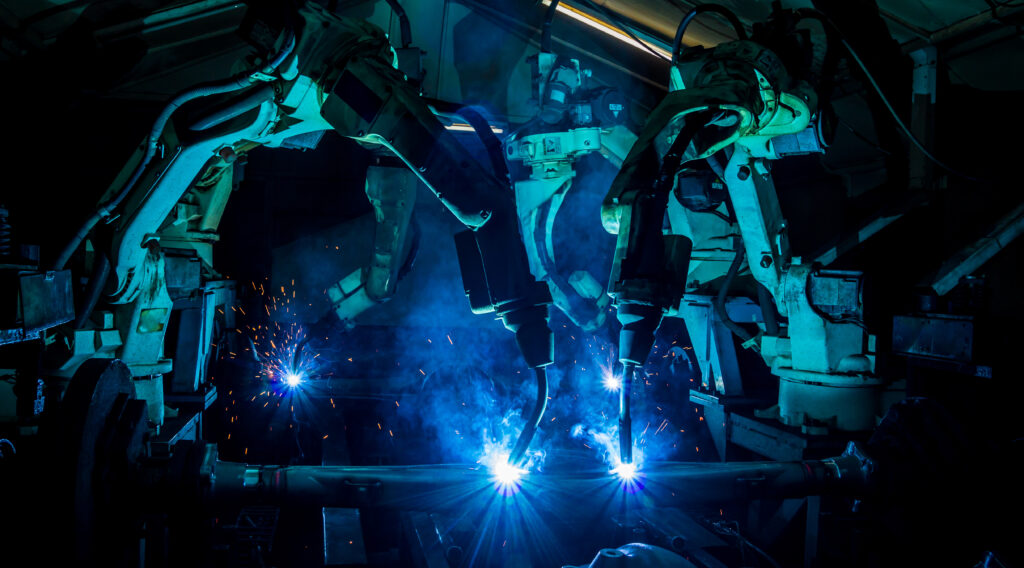
A typical arc welding robot consists of:

  1. Robotic Arm: Provides controlled movement and positioning of the welding torch.
  2. Power Supply: Generates the necessary electrical energy for arc creation.
  3. Wire Feeder: Supplies the welding wire at a controlled rate.
  4. Welding Torch: Directs the arc and shielding gas to the workpiece.
  5. Controller and Software: Governs the robot’s movement and welding parameters.
  6. Safety Systems: Include sensors and protective barriers to prevent accidents.

Advantages of arc welding robots in industrial applications

Enhanced precision and qualityRobots execute consistent welds with minimal defects, improving overall product quality.
Higher efficiency and speedRobots perform tasks faster than human welders, increasing production output.
Cost savingsReduces waste materials and rework due to poor-quality welding.
Improved workplace safetyAutomation eliminates human exposure to hazardous welding environments.
Flexibility and scalabilityEasily adaptable to different welding applications and materials.
Seamless integration with Industry 4.0Compatible with smart manufacturing and IoT-based monitoring systems.

Leading arc welding robot models

Several global manufacturers specialize in advanced arc welding robots. Some of the most notable include:

KUKA Arc Welding Robots

KUKA, a leader in industrial automation, offers the KR CYBERTECH series, designed for precise and efficient arc welding. These robots boast:

  • Payload capacities from 6 to 22 kg.
  • Reach distances up to 3,100 mm.
  • Advanced software such as KUKA.ArcTech, enabling seamless integration and programming.

FANUC Arc Welding Robots

FANUC’s ARC Mate series is renowned for its:

  • High-speed welding operations.
  • Integrated iRVision system for precise seam tracking.
  • Compatibility with advanced sensors and AI-driven programming.

ABB Arc Welding Robots

ABB’s IRB 1600 and IRB 2600 models provide superior flexibility and accuracy, featuring:

  • TrueMove and QuickMove technology for smooth welding paths.
  • Robostudio software for simulation and programming.

Real-world applications

Automotive Industry

Aerospace Sector

Shipbuilding and Heavy Industries

Companies like Mercedes-Benz and Volkswagen implement robotic arc welding for:
  • Chassis and frame assembly.
  • High-strength steel and aluminum welding.
  • Improved welding consistency and reduced manufacturing defects.
Aircraft manufacturers utilize robotic welding for:
  • Complex titanium and aluminum alloy structures.
  • Precision welding of fuselage components.
  • Reduced weight and improved structural integrity.
Shipyards use arc welding robots to:
  • Perform large-scale ship hull welding.
  • Ensure efficient welding of high-strength steel under challenging conditions.

The future of robotic welding and digitalization

As digitalization continue to advance, robotic welding systems will play a pivotal role in shaping the future of industrial production. Traditional training methods often fall short in providing the hands-on experience required to master these advanced systems, and involve costly materials and safety risks.

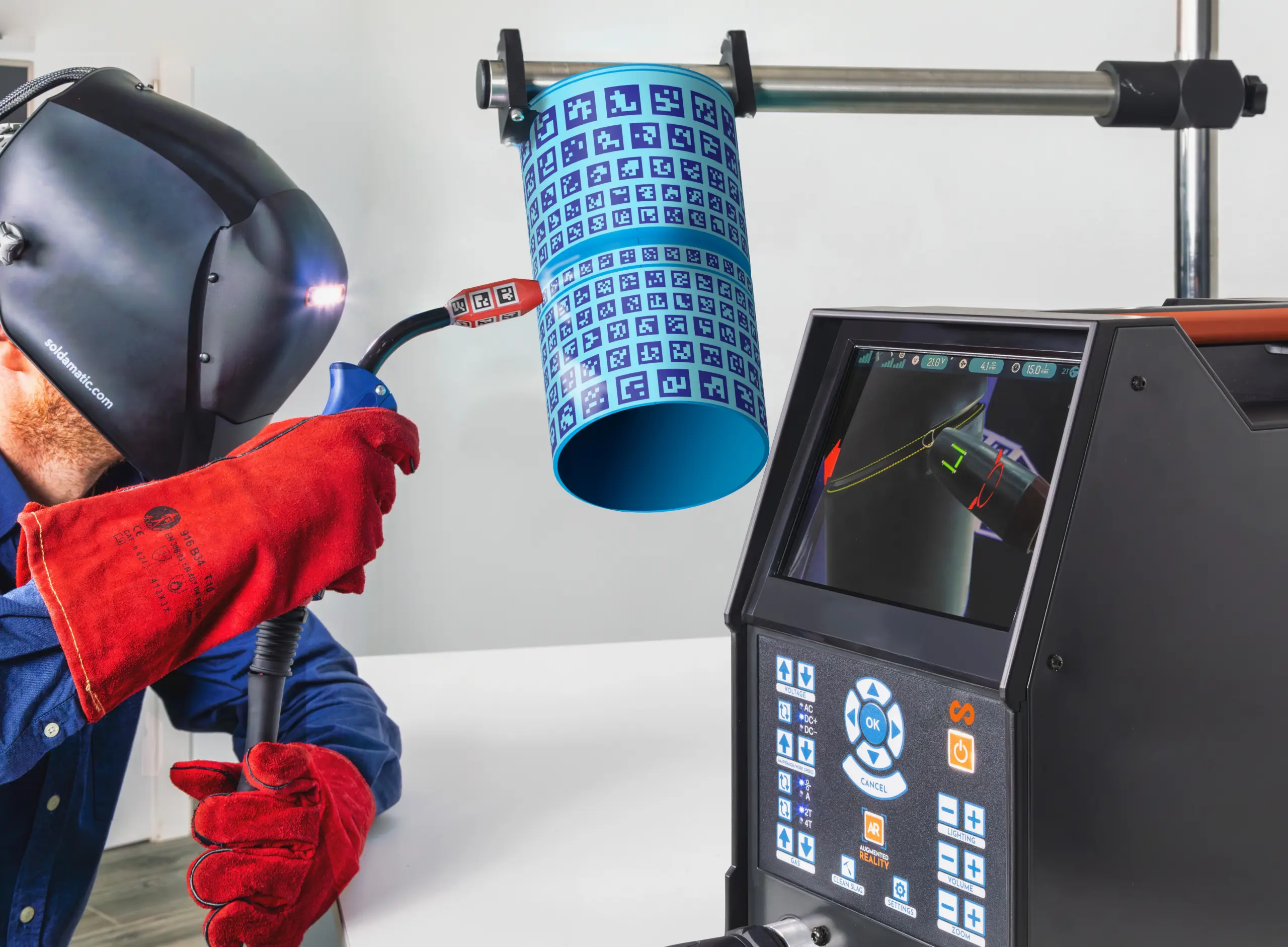
This is where Augmented Reality (AR)-based training systems revolutionize learning. Soldamaticuses real welding equipment integrated with AR technology, enabling users to develop muscle memory and skills essential for actual welding tasks.

How Soldamatic supports robotic welding training

· Realistic simulation: Soldamatic allows trainees to practice welding techniques in a virtual environment before working with real arc welding robots.

· Risk-Free learning: Reduces exposure to high-risk environments, improving safety and confidence before handling robotic welding systems.

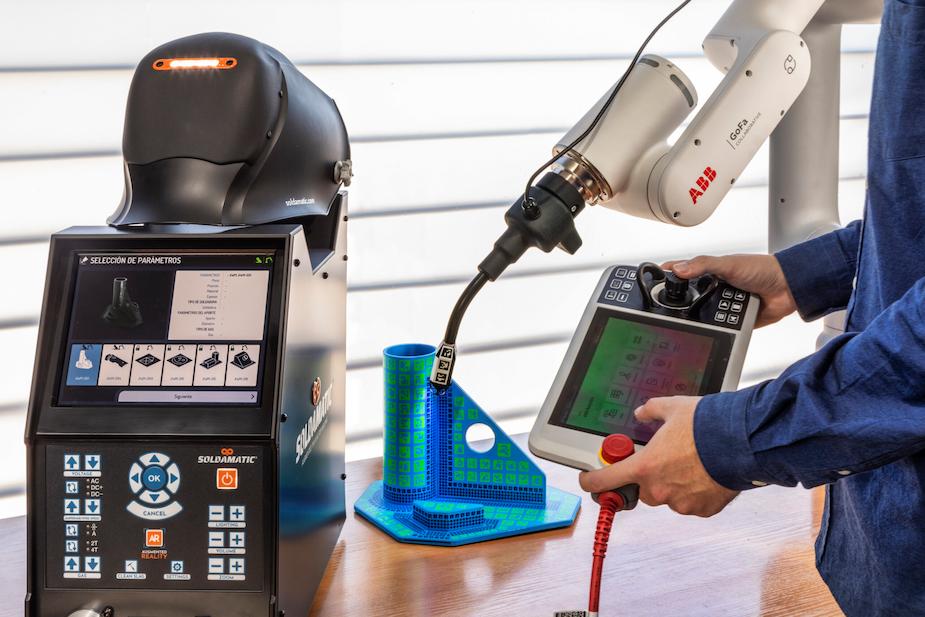
· Integration with robotics: Soldamatic can be used to simulate robotic welding scenarios, teaching operators how to program and oversee automated welding systems.

· Data-driven performance analysis: Provides feedback on welding technique, efficiency, and accuracy, which is crucial for optimizing robotic welding processes.

Arc welding robots have significantly transformed the manufacturing landscape by enhancing precision, efficiency, and safety in welding processes. They represent a transformative force in modern manufacturing. Companies that adopt these technologies gain a competitive edge by improving efficiency, safety, and cost-effectiveness.

As industries continue to adopt robotic welding solutions, Soldamatic ensures that the workforce is well-prepared to handle automation and maximize the benefits of robotic welding technology. Institutions and industrial companies have incorporated such AR-based training tools, recognizing their value in enhancing the learning process and reducing material costs.

Thanks to Augmented Reality technology, workers can perform unlimited exercises without consuming materials or emitting gases. The diverse types of welding robots address to different applications, and Soldamatic Robotics can be integrated in any robot in the actual market.

The role of workers in this robotic environment

Automation and robotization are already a reality in the industry of the present and the future, however, these trends are not designed to completely replace the human component, but rather require this component to coordinate with them. Robots perform perfect welds and routines, as long as they have been programmed to do so.

As automation becomes more prevalent, the demand for skilled welding professionals proficient in operating and programming arc welding robots has surged. This is why specific training designed for these workers is necessary, as they need to operate a series of robots and automated elements in their day-to-day work. In this sense, it is key that the new training methodologies are adapted to the latest technologies and industrial and technological trends. Soldamatic connects with real robotic arms, allowing the worker to be trained with exactly the same resources he will use on the job.

Would you like to book a free online demo?

The Augmented Reality Seabery Robotics solution that bridges welding training and robotic automation. Complete the form to receive more information and explore how it fits your educational or technical program.

Request a product demo

Scroll to Top