Despite the advent of advanced welding technologies, SMAW remains integral due to its versatility, simplicity, and cost-effectiveness. In the era of digitalization and automation, SMAW is experiencing a renaissance, integrating with cutting-edge technologies to enhance its training and operational efficiency.
Understanding SMAW
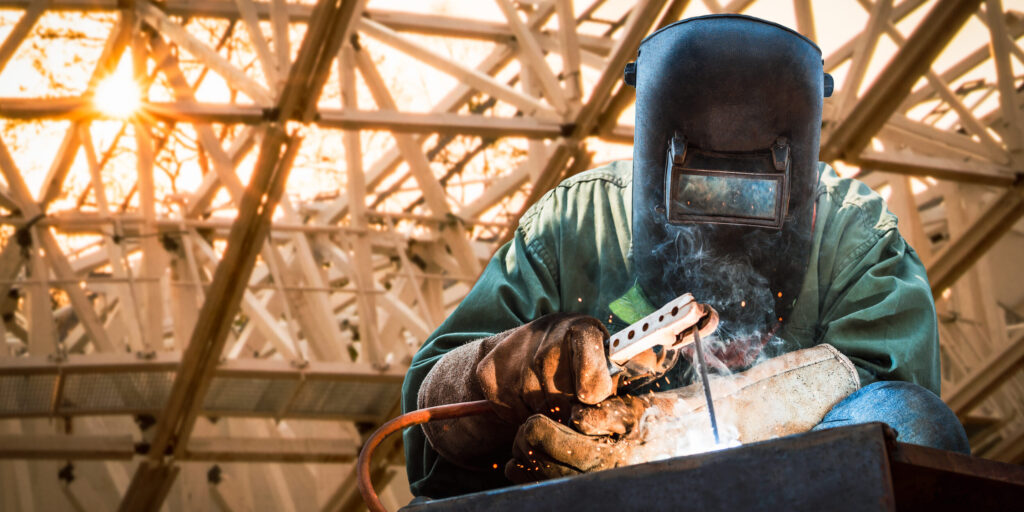
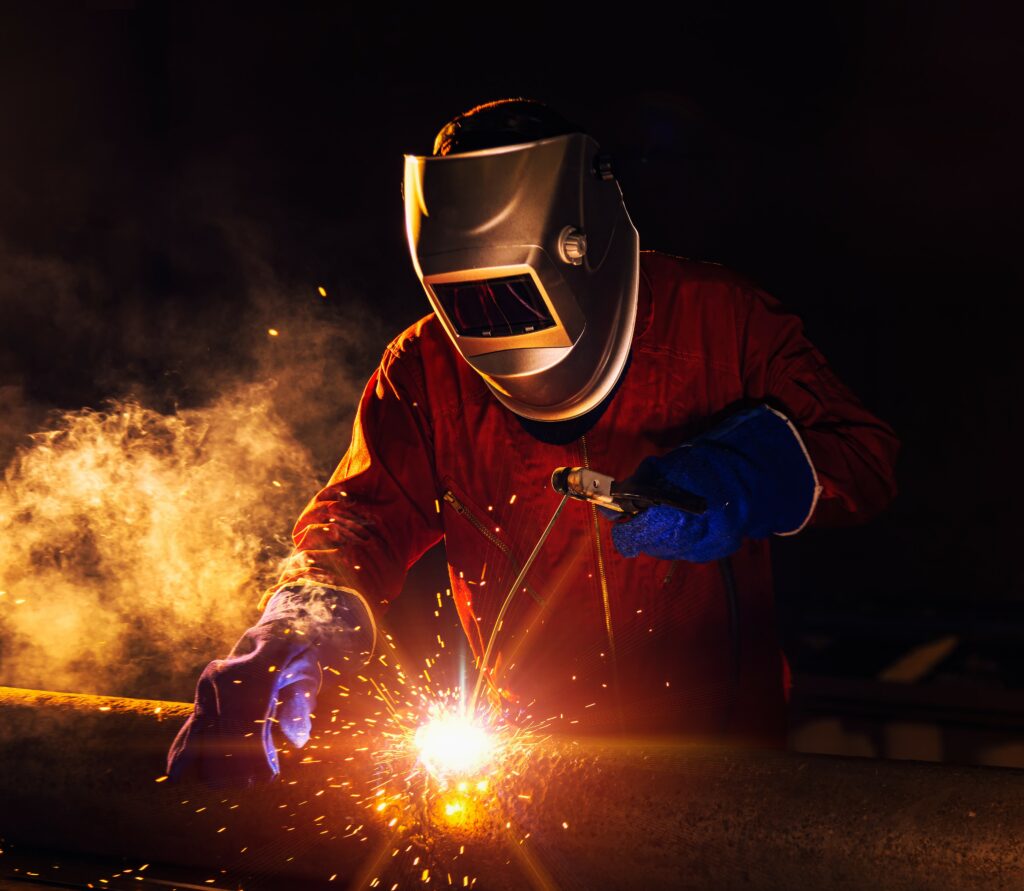
Shielded Metal Arc Welding (SMAW), commonly known as stick welding, is a foundational technique in the welding industry. SMAW is a manual arc welding process that utilizes a consumable, flux-coated electrode to create an electric arc between the electrode and the base material.
The intense heat generated melts both the electrode and the base metal, forming a molten weld pool that solidifies into a strong joint. The flux coating decomposes during welding, emitting gases that shield the weld area from atmospheric contamination and forming a slag layer that protects the cooling weld metal.
Types of SMAW
Shielded Metal Arc Welding (SMAW) itself is a single, well-defined welding process, but within SMAW, there are several variations and classifications based on:
3. Current type and polarity: SMAW can be performed with different types of electrical current. Some electrodes are DC-only, AC-only, or AC/DC-compatible.
4. Base metal and application: SMAW also varies depending on the metal being welded and industrial application. The welding procedure and electrode choice adapt to the base metal and its intended industrial use (structural steel, pipeline, heavy machinery, etc.).
5. Technique variants: Although not formally different “types” welders may use different techniques within SMAW to suit specific goals.
Variation category | Examples |
Electrode type | E6010, E6011, E7018 |
Welding position | Flat, Horizontal, Vertical, Overhead |
Current type | AC, DCEN, DCEP |
Base material | Carbon steel, Stainless steel, Cast iron |
| Technique | Stringer, Weave, Whip and pause |
Advantages and strengths of SMAW
Stick welding offers a number of key strengths that make it widely used across various industries:
- Versatility: Its ability to weld various metals (including carbon steel, stainless steel, cast iron, and nickel alloys) adds to its versatility. It is a flexible solution for general fabrication, repair work, and maintenance.
- Portability: SMAW’s equipment is relatively simple and portable, making it ideal for fieldwork and remote locations related to construction, pipeline, and shipbuilding industries where mobility is essential.
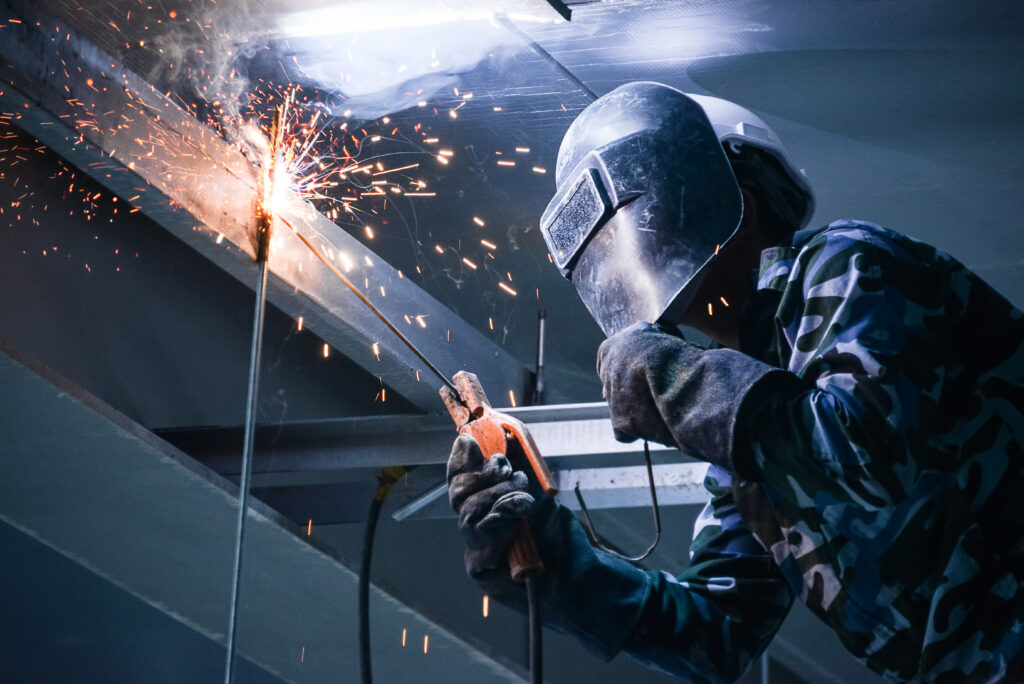
- Skill development: SMAW requires manual dexterity and technique, making it excellent for training foundational welding skills. It is often used as the first process taught in welding education and certification programs.
- All-position welding: The process allows welding in all positions: flat, horizontal, vertical, and overhead. This flexibility makes it adaptable to a range of weld joint orientations, crucial for complex structures and repair work.
- Cost-effectiveness: SMAW does not require external shielding gases, reducing operational costs. This welding process is suitable for outdoor environments, even in windy conditions where other processes (such as MIG or TIG) would fail without gas enclosures. The equipment’s affordability and low maintenance needs make it accessible for small businesses and educational institutions.
Challenges and limitations of SMAW
- Not ideal for thin materials: SMAW is less suitable for welding thin materials (less than 3mm) due to the risk of burn-through. Alternative processes like Gas Tungsten Arc Welding (GTAW) are preferred for such applications.
- Skill requirements: Achieving high-quality welds with SMAW requires significant skill and experience, particularly for out-of-position welding. The manual nature of the process means that operator proficiency directly impacts weld quality.
- Lower productivity: Compared to semi-automatic processes like Gas Metal Arc Welding (GMAW), SMAW has a lower deposition rate. Frequent electrode changes and slag removal can slow down the welding process.
Shielded Metal Arc Welding (SMAW) Process | |
Advantages | Challenges |
Versatility and portability | Not ideal for thin materials |
Skill development | Skill requirements |
| All-position welding | Lower productivity |
| Outdoor suitability | |
SMAW in the Digital Age: Integration with Augmented Reality
The integration of Augmented Reality (AR) into welding training has revolutionized the way welders acquire their skills.
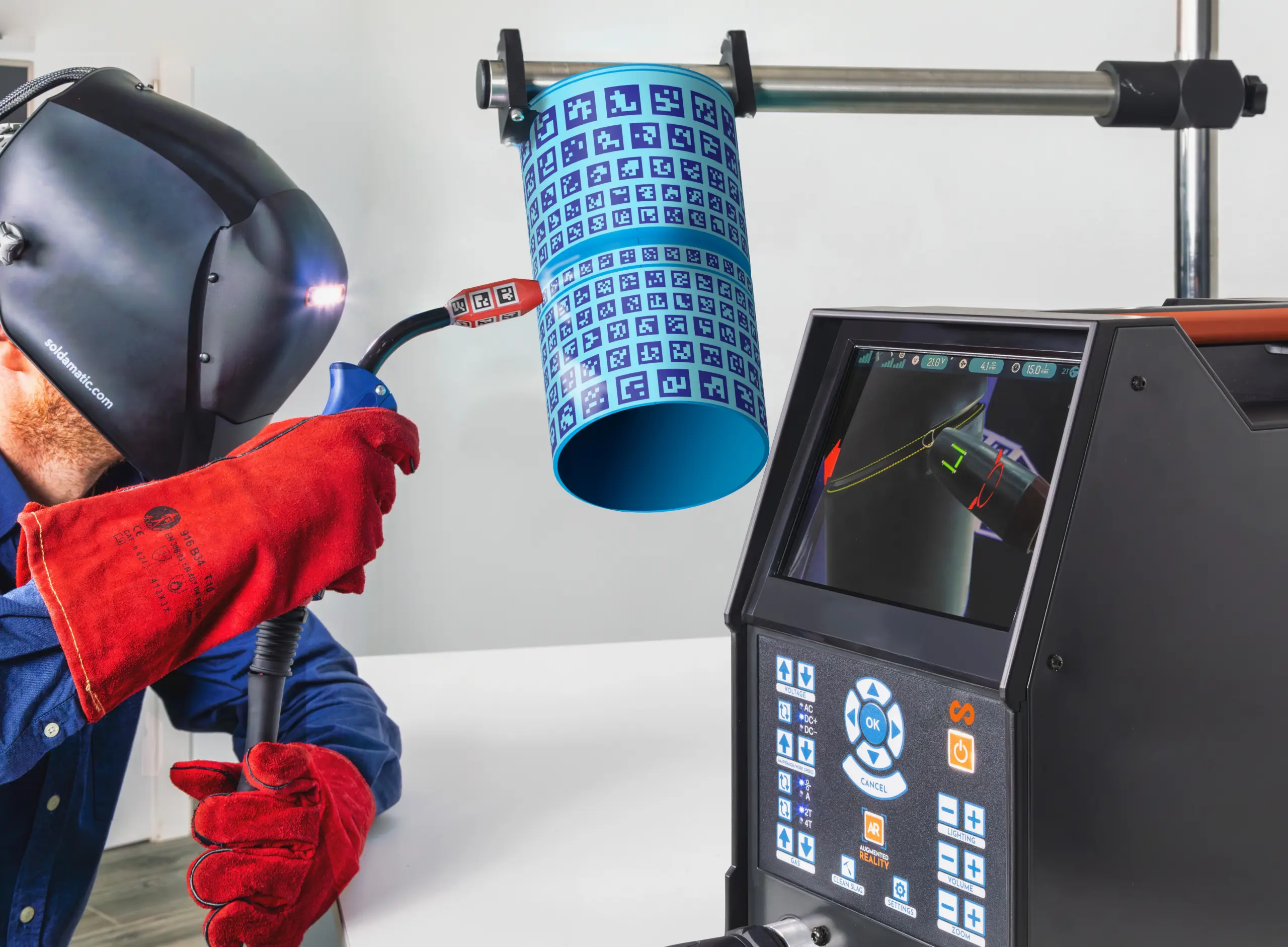
Seabery Welding Simulator provides immersive and interactive training environments that replicate real-world welding scenarios where trainees can improve welding techniques without the risks associated with live welding.
Soldamatic is a pioneering AR welding simulator that combines cutting-edgetechnology with comprehensive training modules. It offers a range of features designed to enhance the learning experience:
Realistic simulation: Utilizing HyperReal-Sim™ technology, this welding solution delivers highly accurate welding practices.
Comprehensive curriculum and standarized training: Soldamatic includes a wide array of welding processes and positions, catering to various skill levels and training requirements. Furthermore, it ensures consistent training experiences across different locations and instructors thanks to the different welding courses in collaboration with welding associations.
Immediate feedback and remote monitoring: This solution also provides real-time feedback on technique, helping trainees to correct errors promptly. Supervisors can monitor welding operations in real-time, even from remote locations, enhancing oversight and efficiency.
Soldamatic’s Advanced Welding Multijoints to practice SMAW | |
AWM001 | Foundational Ambidex |
AWM002 | Foundational Complex Sequence |
AWM006 | Shipbuilding Open Root |
AWM007 | Shipbuilding Backing Strip |
AWM008 | Pipeline 6” Schedule 80 |
AWM012 | Pipeline Monster Coupon |
AWM013 | Foundational Multilap |
The integration of digital tools such as AR enhances training for SMAW in a more accessible and sustainable path. Soldamatic enable trainees to practice SMAW in a virtual environment, offering cost savings and reducing waste while maintaining safety.
Stick welding: a key to industrial excellence
Shielded Metal Arc Welding (SMAW) remains a vital process in the welding industry, valued for its versatility especially in challenging environments where wind might pose issues for other processes.
Technological advancements are transforming SMAW from a purely manual craft into a process that benefits from the precision and efficiency of digital tools. As the industry continues to evolve, embracing these innovations will be key to maintaining high standards and meeting the challenges of modern manufacturing.