

Spray painting is a valuable professional skill across automotive refinishing, industrial coating, manufacturing, marine, railway, aerospace, and technical maintenance environments. A high-quality finish is not only about visual appearance; it also affects durability, corrosion protection, material efficiency, safety, and customer satisfaction. For this reason, choosing the right spray painting certification or training pathway is essential for students, technicians, instructors, and companies that need reliable, job-ready painters.
The best spray painting courses combine theory, hands-on practice, safety procedures, equipment handling, surface preparation, coating application, defect detection, and performance assessment. However, not every course has the same purpose. Some are designed for automotive refinishing, others for industrial protective coatings, and others for professional upskilling inside companies or vocational schools.
What Makes a Good Spray Painting Certification?
A strong spray painting certification should go beyond simply teaching how to use a spray gun. It should help learners understand the full painting process, from preparing the surface to applying coatings with the right distance, speed, angle, overlap, pressure, and technique.
The most effective courses usually include three key elements: structured learning, practical repetition, and objective evaluation. Without repetition, students may understand the theory but fail to build the muscle memory needed for consistent results. Without evaluation, it becomes difficult to identify whether defects are caused by poor distance, excessive speed, incorrect angle, lack of coverage, or inefficient material use.
Safety is also a central part of professional training. Spray painting can involve fumes, overspray, solvents, compressed air, protective equipment, and controlled working environments. A good training program should therefore include personal protective equipment, booth procedures, ventilation awareness, environmental responsibility, and correct handling of materials.
Best Types of Spray Painting Courses and Certifications
Course or certification type | Best for | Main focus | Warum das wichtig ist |
Industrial spray application certification | Industrial, marine, infrastructure and protective coatings | Airless or conventional spray equipment, coating application, safety and assessment | Helps validate professional competence in demanding industrial environments |
Automotive refinish training | Body shops, collision repair centres and vehicle refinishing students | Colour matching, surface preparation, refinishing quality and repair standards | Supports consistent finish quality in customer-facing repair work |
Paint manufacturer training | Technicians using specific paint systems | Product knowledge, application procedures, productivity and quality | Helps painters follow correct technical data sheets and product workflows |
Vocational school spray painting courses | Students and entry-level painters | Basic techniques, safety, tools, materials and practical exercises | Builds the foundation for employment or further specialisation |
Simulation-based spray painting training | Schools, training centres and companies | Repetitive practice, guided exercises, objective data and reduced material use | Allows learners to practise more often before moving to real paint booths |
1. Industrial Spray Application Certification
For industrial and marine environments, one of the most relevant options is the AMPP Spray Application Certification C12. AMPP describes this certification as a course designed to train and certify marine and industrial applicators to operate airless and conventional spray equipment. This makes it especially relevant for sectors where coating quality is directly linked to asset protection and long-term durability.
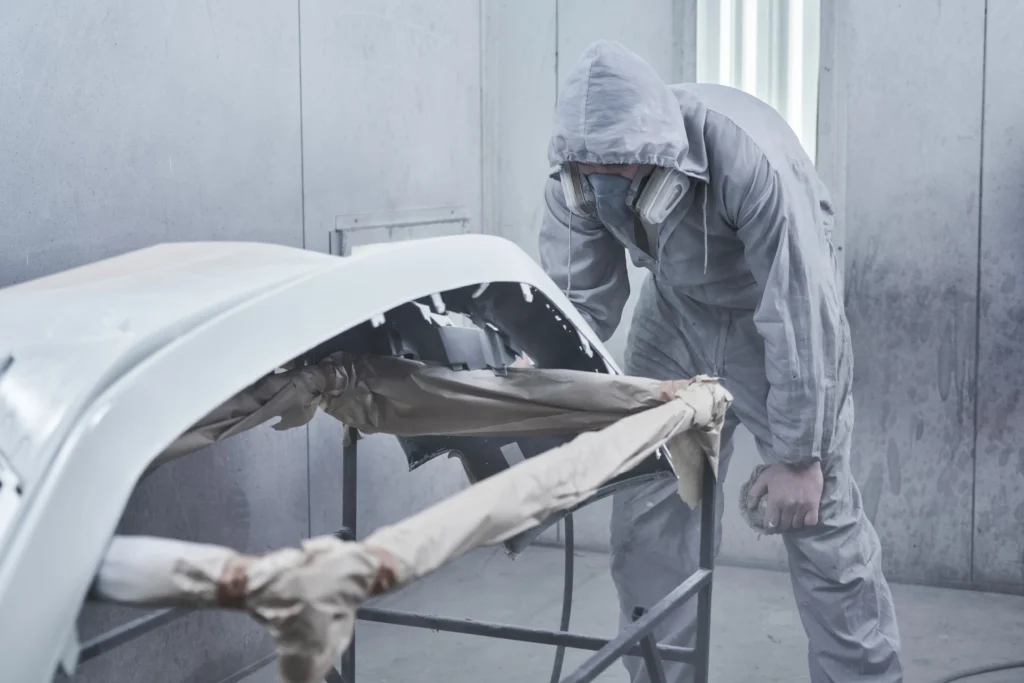
This type of spray painting certification is suitable for workers who need to demonstrate practical competence in industrial coating application. It is particularly useful in sectors such as shipbuilding, oil and gas, steel structures, infrastructure, and heavy industry, where poor coating application can lead to premature corrosion, rework, downtime, and higher maintenance costs.
2. Automotive Refinish Technician Training
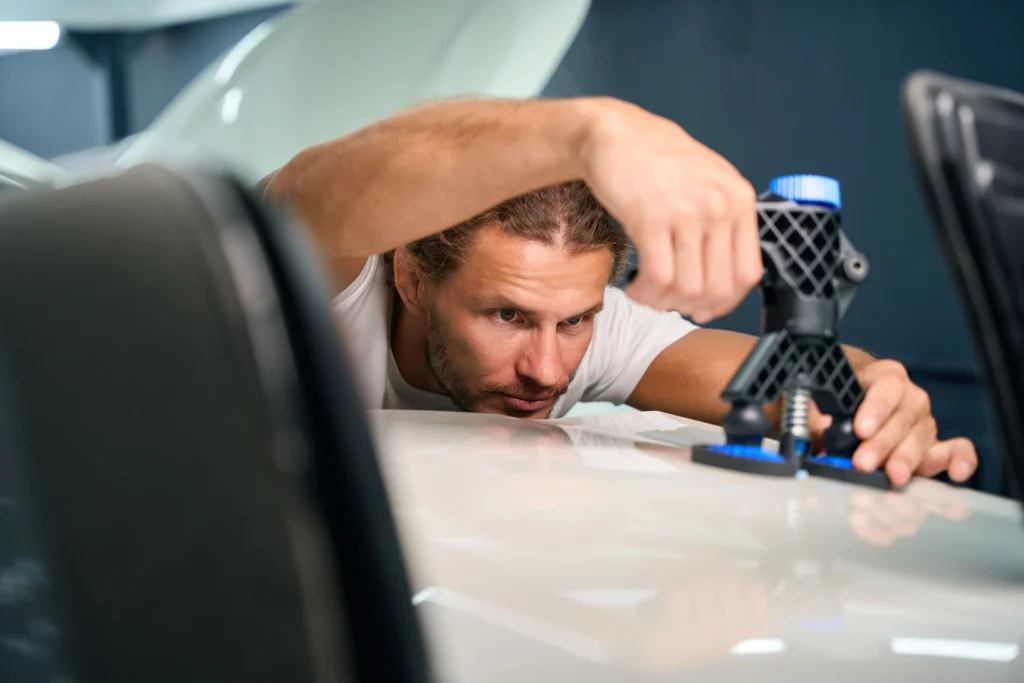
For the automotive sector, I-CAR is one of the best-known training organisations. Its Refinish Technician Platinum Path is designed for professionals who work on vehicle appearance and finish quality after collision repair. I-CAR explains that refinish technicians play a key role in ensuring vehicles look as good as, or better than, before the accident.
This pathway is ideal for collision repair centres, vocational schools, and automotive technicians who want to specialise in refinishing. It can include topics such as substrate preparation, paint application, blending, colour matching, clearcoat application, and quality control. For anyone seeking a spray painting certification focused on vehicles, automotive refinish training is one of the most direct routes.
3. Paint Manufacturer Certification Programs
Paint manufacturers also offer valuable professional training because they teach painters how to apply specific coating systems correctly. For example, PPG states that its certification training helps automotive and commercial refinish technicians stay up to date with products, processes, techniques, productivity, and quality.
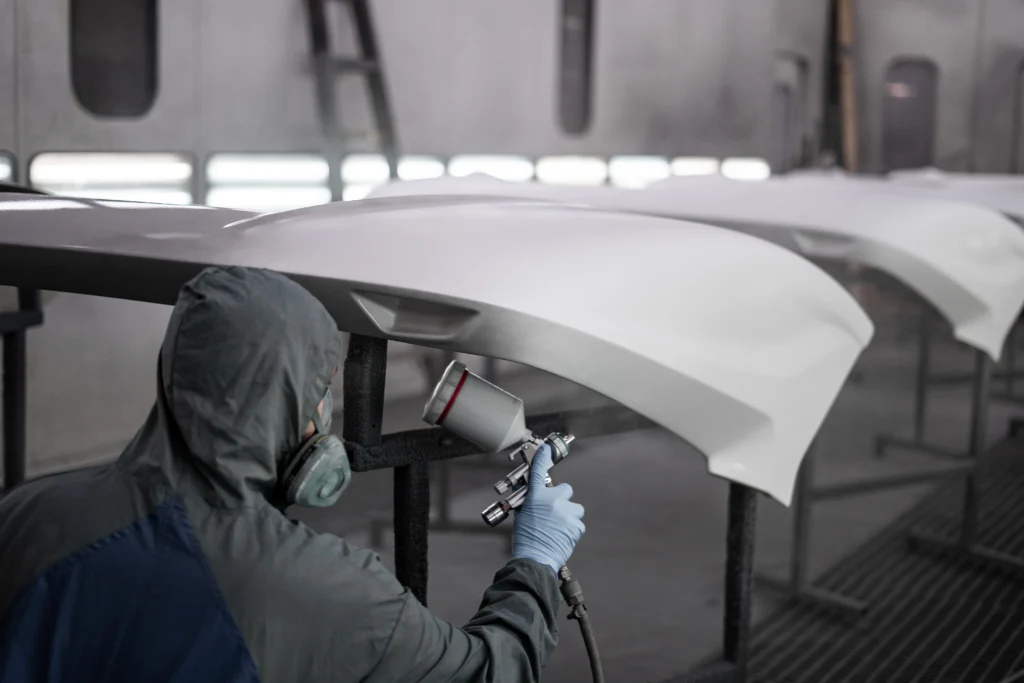
These programs are useful for painters already working with a specific paint brand or repair network. They usually focus on product systems, technical data sheets, application windows, mixing procedures, surface preparation, drying times, and troubleshooting. While they may be more brand-specific than independent certifications, they are highly practical for workshops that want consistent results with the products they use every day.

4. Vocational and Technical School Programs
Vocational schools and technical training centres are often the best option for beginners. These programs usually provide a broader foundation, including workshop safety, masking, sanding, primers, spray gun handling, paint booth discipline, defect correction, and basic repair processes.
For students, this type of course is often the first step before moving into more specialised certification. For training centres, it is also an opportunity to build structured learning pathways where students progress from basic movement control to more advanced application techniques.
A good vocational course should include a balance between classroom learning and practical exercises. However, the cost of consumables, paint, booth time, ventilation, waste management, and safety supervision can limit how much real practice each student receives. This is one of the reasons why digital and augmented reality tools are becoming more relevant in professional skills training.
How to Choose the Right Spray Painting Certification
The best spray painting certification depends on the learner’s objective. A student entering the automotive sector should prioritise refinish training. An industrial painter should look for protective coating and spray application certification. A company that wants to upskill existing workers should choose a program that combines practical exercises, measurable assessment, and repeatable training.
Before choosing a course, it is useful to ask: does it include real equipment handling? Does it evaluate technique? Does it cover safety? Does it teach defect prevention? Does it provide enough practice time? Does it connect with industry requirements? Does it help instructors track progress?
The strongest programs are those that do not only certify attendance, but actually prove that the learner has improved.
Why Simulation Can Improve Spray Painting Training
Simulation can make spray painting training more efficient, safe and measurable. Traditional practice requires paint, consumables, booth time, ventilation and waste management, which can limit how often students practise. With simulation, learners can repeat exercises more frequently before moving to real paint applications.
It also helps students improve key manual skills such as distance, angle, speed, trajectory and coverage. These factors directly affect coating quality and are often the cause of common defects. By receiving immediate feedback, learners can correct mistakes earlier and build confidence before entering a real paint booth.
For instructors and companies, simulation provides objective data to track progress, identify weaknesses and personalise training. It reduces early-stage material waste and risk while preparing learners for real spray painting tasks.
Seabery Spray Painting Simulator: A New Way to Train Professional Painters
Seabery Spray Painting Simulator takes these benefits further by using augmented reality to create a highly realistic and effective training environment for future spray painting professionals. Unlike purely virtual systems, augmented reality allows users to stay connected to the real world while performing real movements with realistic equipment. This is essential because spray painting is a manual skill that depends on body position, hand movement, distance, angle, speed and muscle memory.
The simulator combines a realistic spray-painting gun, stereovision headset, workstand and ModulAR training parts to reproduce professional spray painting exercises in a controlled digital environment. Learners receive visual guides for distance, angle and speed, helping them understand how their movements affect the final result.

The system also includes dry film thickness analysis, painting quality assessment, defect detection such as orange peel and sagging, coverage analysis, transfer efficiency, paint consumption and time spent.
For instructors, Seabery Spray Painting Simulator offers a more structured and scalable way to manage training. Teachers can create and assign exercises, select workpieces, configure paint systems, adjust difficulty levels and review student results through the analysis module. This makes it easier to manage students with different levels, learning speeds and training needs.
By reducing the need for early-stage real booth practice, the simulator helps lower costs, reduce material waste, minimise risks and accelerate the learning process. It does not replace real spray painting, but it prepares learners better for it. As part of a broader spray painting certification pathway, Seabery Spray Painting Simulator can help schools, training centres and companies develop safer, more confident and more technically prepared painters.
Training Better Painters
The best spray painting courses and certifications are the ones that combine recognised standards, practical experience, safety awareness, and measurable performance. Whether the goal is automotive refinishing, industrial coating, or vocational training, a strong spray painting certification should prepare painters for real working conditions.
As the industry evolves, augmented reality training offers a powerful way to make learning more efficient, objective, and scalable. By combining recognised certification pathways with simulation-based practice, training centres can help students become safer, more confident, and better-prepared professional painters.